
Understanding Slip and Fall Accidents in Virginia
A slip and fall accident can change your life in seconds. Whether you slipped on a wet floor, tripped on uneven pavement, or fell down poorly maintained stairs, these incidents are often more serious than people realize.
What is a slip and fall accident?
- An incident where someone loses footing and falls on another’s property
- Falls under Virginia’s premises liability law
- Can result in severe injuries like broken bones, head trauma, or spinal damage
- Property owners may be legally responsible if they failed to keep conditions safe
Common causes include:
- Wet or slippery floors without warning signs
- Uneven sidewalks or parking lots
- Poor lighting in stairwells
- Torn carpeting or loose floor tiles
- Ice and snow not properly cleared
In Virginia, these cases present unique legal challenges. The state follows a strict contributory negligence rule, meaning if you are found even slightly at fault for your fall, you may be completely barred from recovering compensation. This harsh standard makes it crucial to understand your rights and act immediately after an accident.
Property owners in Virginia have a legal duty to maintain reasonably safe conditions for visitors. If they fail and someone gets hurt, they can be held liable for medical bills, lost wages, pain and suffering, and other damages.
The Property Owner’s Duty of Care in Virginia
When you visit a Virginia property, you might not think about the owner’s legal responsibilities. But understanding premises liability law is crucial if you are injured in a slip and fall accident.
In Virginia, a property owner’s responsibility depends on your visitor status. The law categorizes visitors into three main groups, and your status determines the level of care the property owner owes you.
A business invitee receives the highest level of protection. This includes customers in stores, diners in restaurants, or anyone invited onto a property for the owner’s commercial benefit. Owners must inspect their premises for dangers, fix any hazards, and warn you about known problems they cannot immediately resolve.
Licensees are people with permission to be on a property for their own purposes, like social guests. Owners must warn licensees of known, non-obvious dangers but do not have to search for hidden problems.
Trespassers receive the least protection, though property owners still cannot intentionally harm them. Special rules apply to child trespassers under Virginia’s “attractive nuisance” doctrine.
The reasonable care standard requires property owners to maintain their premises in a condition that will not unreasonably endanger visitors. This includes addressing known dangers and hidden hazards.

Determining Who is Legally Responsible
Determining who is responsible for your slip and fall accident is not always straightforward. The answer depends on who controlled the area and had the duty to keep it safe.
Often, the property owner is responsible. However, it can be the business operator who leases the space, especially if they control daily operations and maintenance. In shopping centers, a store owner may be liable for hazards inside their shop, while the landlord handles common areas like parking lots.
Landlord versus tenant liability often depends on the lease agreement. For an injury in an apartment hallway, the landlord is typically responsible. If you slip in a rented store, the tenant might be liable.
When government entities own the property, you must follow strict rules. Virginia cities and counties require a written Notice of Claim within six months of the injury. If you miss this deadline, you could lose your right to compensation.
For a deeper understanding of fault determination, you can read more about Slip and Fall Premises Injury: Who’s at Fault?.
How Weather and Maintenance Affect Liability
Virginia’s changing seasons create unique challenges. Rain, snow, and ice conditions can lead to serious falls. While owners are not responsible for the weather itself, they must respond reasonably to the dangers it creates.
Timely removal of hazards is key. Owners cannot ignore icy walkways or leave standing water without warning signs. Virginia courts examine whether the response was reasonable under the circumstances.
Keeping routine inspection logs can be crucial evidence to show an owner met their legal duties.
Poor lighting creates hidden dangers in stairwells and parking areas. Uneven surfaces like cracked sidewalks or damaged flooring pose constant tripping risks.
Building code violations can be strong evidence of negligence. Ignoring safety requirements for stairs, railings, or ramps often leads to preventable injuries.
In Virginia, regular maintenance is often a legal requirement. Owners who neglect their duties may face significant liability when someone gets hurt.
To learn more about prevention strategies in our local area, check out how to Prevent Slip and Fall Accidents in Loudoun County.
Proving Negligence in a Virginia Slip and Fall Accident

First is duty: The property owner owed you a legal obligation to maintain reasonably safe conditions. This duty varies based on your status as an invitee, licensee, or trespasser.
Second is breach: You must show the owner failed their duty by not reasonably fixing or warning of hazards. For example, they may have ignored a leaky ceiling or failed to inspect for loose handrails.
Third is causation: The owner’s specific negligence must have caused your fall and injuries.
Fourth is damages: You must have suffered real harm, such as medical bills, lost wages, or pain and suffering.
Proving negligence also requires showing the harm was foreseeable. We must show a reasonable property owner should have anticipated the dangerous condition could cause injury. You also need to establish the owner had “notice” of the hazard. Actual notice means they knew about it, while constructive notice means they should have known about it through reasonable inspection.
Because falls are a leading cause of injury for older adults, the duty of care is even more critical for properties serving vulnerable populations.
The Harsh Reality of Virginia’s Contributory Negligence Rule
Virginia law is particularly unforgiving due to its strict contributory negligence rule, a major hurdle in slip and fall accident cases. Under this rule, if you contributed to your own injury in any way, no matter how small, you cannot recover any compensation. Even 1% of fault on your part completely bars recovery.
Virginia’s all-or-nothing approach means your compensation is eliminated, not just reduced. Insurance companies use this rule aggressively, arguing you were distracted, wearing improper shoes, or that the hazard was “open and obvious” and you should have avoided it.
What Evidence is Crucial for Your Slip and Fall Accident Claim?
A winning Virginia slip and fall accident case requires quick and thorough evidence gathering. The quality of your evidence is critical due to the contributory negligence rule.

- Photographic evidence: If you are able, take pictures of the exact spot where you fell. Capture the hazard, lighting, and any warning signs (or lack thereof) from multiple angles.
- Surveillance video: Many businesses delete security footage quickly, so requesting its preservation in writing is critical.
- Witness information: Get contact information from anyone who saw the fall or the hazard. Their testimony can be invaluable.
- Incident report: Ask the property manager to complete an official report and request a copy.
- Medical documentation: Seek prompt medical attention. Your records prove your injuries and link them to the fall.
- Damaged clothing and shoes: Preserve the items you were wearing. Do not clean or discard them, as they can be important evidence.
In Virginia, thorough evidence collection is essential to protect your rights and overcome contributory negligence challenges.
Critical Steps to Take Immediately After a Fall
The moments after a slip and fall accident can be overwhelming. What you do next can significantly impact your health and any potential Virginia legal claim.
First, seek prompt medical attention, even if you think you are okay. Adrenaline can mask serious injuries like concussions, which may have delayed symptoms. A doctor’s visit creates a medical record linking your injuries to the fall, which is crucial evidence for any future claim.
Next, report the accident to management. Find the property owner, manager, or an employee and tell them what happened. Ask them to complete an incident report and request a copy.
Document everything about the scene. Photograph the exact spot, the hazard, and the surrounding area. Also, photograph your injuries as they develop and keep the clothes and shoes you were wearing.
Crucially, do not admit fault. Statements like “I should have been more careful” can seriously hurt your case. Don’t give insurance companies ammunition to use Virginia’s harsh contributory negligence rule against you. Insurers may argue that delayed treatment means your injuries are not serious or were not caused by the fall, so do not delay.
Learn more about Our Approach to Personal Injury Law in Virginia.
Common Injuries and Why Medical Care is Vital
Slip and fall accidents often cause more serious injuries than people expect, including:
- Traumatic Brain Injuries (TBI): Hitting your head can cause a concussion or more severe brain injury, leading to memory problems, headaches, and mood changes.
- Spinal cord damage: A fall can herniate discs, pinch nerves, or cause paralysis, often requiring extensive therapy or surgery.
- Broken bones: Hip fractures are especially dangerous for older adults. Wrist, ankle, and leg fractures are also common.
- Soft tissue injuries: Sprains and tears might not seem serious but can cause chronic pain and instability, often taking longer to heal than broken bones.
- Shoulder dislocation: This common injury can occur when landing on an outstretched arm.
- Chronic pain: Many fall victims develop persistent pain that affects their daily life long after the initial injury heals.
Prompt medical care is vital for your health and for protecting your legal rights by documenting that the fall caused your injuries.
What to Do After a Slip and Fall Accident
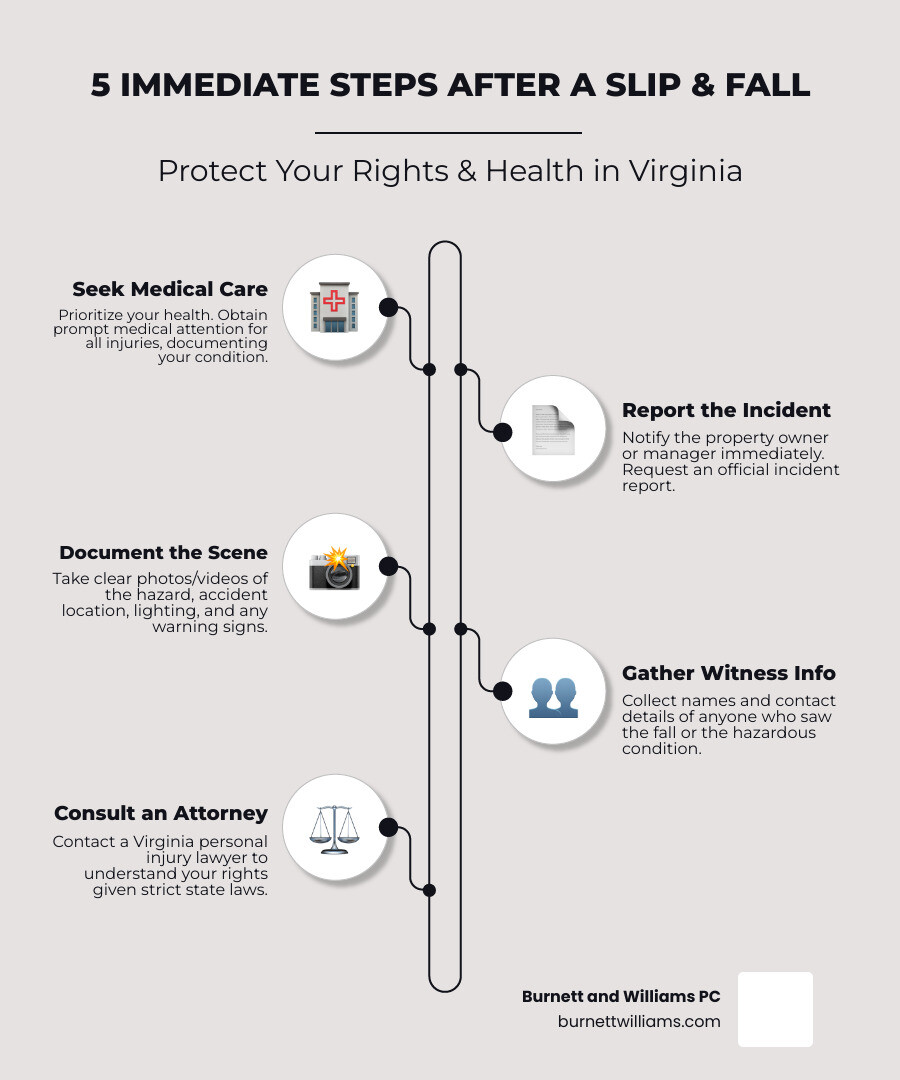
Here is a clear action plan to follow after a fall:
- Seek Medical Care Immediately: See a doctor promptly, follow all medical advice, and keep detailed records of treatments and bills.
- Report the Incident: Formally report the fall to the property owner or manager. Be aware of Virginia’s strict, short Notice of Claim deadlines for government property.
- Document Everything: Take photos of the hazard, the scene, and your injuries. Save the clothing and shoes you were wearing.
- Get Witness Information: Get names and contact information from anyone who saw the fall or the hazard. Their testimony can be crucial.
- Contact an Attorney: Speak to a lawyer before talking to insurance adjusters. An attorney can protect your rights and handle communications for you.
Understanding Compensation and Legal Deadlines
If another’s negligence causes your slip and fall accident, Virginia law allows you to seek compensation for your losses. The goal is to restore you to the position you were in before the accident.

Compensation is divided into two main categories. Economic damages cover measurable financial losses, including:
- Medical expenses
- Lost wages
- Reduced future earnings
Non-economic damages address the impacts on your life that are harder to measure, such as:
- Pain and suffering
- Loss of enjoyment of life
- Inconvenience from dealing with your recovery
Virginia’s Statute of Limitations for Personal Injury
Virginia has a strict two-year statute of limitations to file a lawsuit from the date of your slip and fall accident. If you miss this deadline, you will likely lose your right to seek compensation forever.
This two-year clock starts on the date of the fall, not when you find the full extent of your injuries. It is crucial to act quickly, as evidence disappears, witnesses move, and memories fade. There are very few exceptions to this rule, so do not gamble with your rights by waiting.
If you’re wondering whether your situation warrants legal help, consider reading about How Do You Know If You Need a Personal Injury Lawyer?.
When to Hire a Lawyer for Your Case
You should seek legal help immediately if you have serious injuries, or if the property owner or their insurance company disputes fault. Virginia’s harsh contributory negligence rule means even slight fault on your part can bar your recovery, and insurance companies use this to shift blame onto you.
An experienced attorney should handle all communications with insurance adjusters. Adjusters are trained to minimize payouts and may press for quick settlements before you know the full extent of your injuries. A lawyer can also help with maximizing your compensation by identifying all available damages.
Since most personal injury cases settle out of court, skilled legal representation often leads to better outcomes. If you’re dealing with any of these situations, learn more about the 8 Things a Personal Injury Lawyer Can Do in Virginia to protect your interests.
Conclusion
After a slip and fall accident in Virginia, you face not just physical injuries but a challenging legal landscape. Virginia’s strict contributory negligence rule means a small mistake on your part could eliminate your right to compensation. This harsh reality makes every detail of your case critical.
Virginia’s two-year statute of limitations does not pause for your recovery, and evidence must be collected quickly before it disappears. Taking swift action is essential to protect your rights.
Proving a property owner failed their duty to maintain safe conditions requires skill, experience, and a deep understanding of Virginia law. At Burnett & Williams PC, we have seen how these accidents can turn lives upside down. We understand the stress of medical bills, insurance companies, and worrying about your family’s future. We are committed to responsive, caring service, keeping you involved in every decision.
If you or a loved one was injured in a slip and fall accident in Virginia, you do not have to face this challenge alone. We offer a free case evaluation to discuss your situation, explain your rights under Virginia law, and outline your options.
Do not let Virginia’s complex legal system stop you from seeking the compensation you deserve. Contact a Virginia Personal Injury Attorney at Burnett & Williams PC today to take the first step toward recovery.