
When a Brain Injury Changes Everything: Helping Virginians Move Forward
Traumatic brain injury attorney services are essential when an accident leaves you or a loved one facing life-altering cognitive, physical, or emotional challenges. If you’re searching for legal help after a brain injury in Virginia, here’s what you need to know right away:
Quick Answer: What a Traumatic Brain Injury Attorney Does
- Investigates your accident to prove who was at fault (car crash, fall, workplace incident)
- Gathers medical evidence from neurologists and brain specialists to document your injury
- Calculates full damages including lost wages and pain and suffering
- Steers Virginia’s strict laws like the two-year statute of limitations and contributory negligence rule
- Negotiates with insurance companies who often try to minimize brain injury claims
- Advocates for maximum compensation so you can focus on recovery, not legal battles
Every year, more than 1.5 million Americans suffer a traumatic brain injury. In Virginia alone, thousands of people experience TBIs from car accidents on I-95, slip and falls in Fairfax County, or workplace incidents across the Commonwealth. These injuries are rarely “minor.” Even a concussion can lead to memory loss, personality changes, and chronic headaches that last for years.
The stakes are high. Brain injuries often require lifelong care, including physical therapy, occupational therapy, and psychological counseling. Medical bills can reach hundreds of thousands of dollars. Lost wages pile up when you can’t return to work. And insurance companies know this, which is why they often push for quick, low settlements before you understand the full impact of your injury.
You don’t have to face this alone. A Virginia brain injury lawyer understands how to build a strong case, work with medical experts, and hold negligent parties accountable. Most importantly, they work on a contingency fee basis, meaning you pay no attorney fee unless you win.
Virginia law is unforgiving when it comes to personal injury claims. You have just two years from the date of your accident to file a lawsuit. If you’re even 1% at fault for the accident, you could lose your right to any compensation under Virginia’s contributory negligence rule. That’s why getting experienced legal help early matters so much.
Quick Personal injury guidance:
Understanding the Devastating Impact of a Traumatic Brain Injury (TBI)
A traumatic brain injury (TBI) is more than just a bump on the head. It occurs when an external force, such as a sudden blow or jolt, causes damage to the brain’s delicate tissues. This damage can disrupt the brain’s normal functioning, leading to a wide range of physical, cognitive, and emotional impairments. Unlike injuries to other parts of the body, brain injuries often have severe and lasting impacts that can fundamentally change a person’s life and personality.
According to the National Institute of Neurological Disorders and Stroke, TBIs are categorized as either closed or open. A closed head injury, which does not involve penetration of the skull, is typically caused by car accidents, falls, or being struck by an object. Open head injuries, on the other hand, involve an object piercing the skull and entering the brain. Our focus in legal cases primarily revolves around these traumatic incidents.
Common Causes and Symptoms of TBIs in Virginia
Traumatic brain injuries in Virginia stem from various incidents, often due to someone else’s negligence. We frequently see cases arising from:
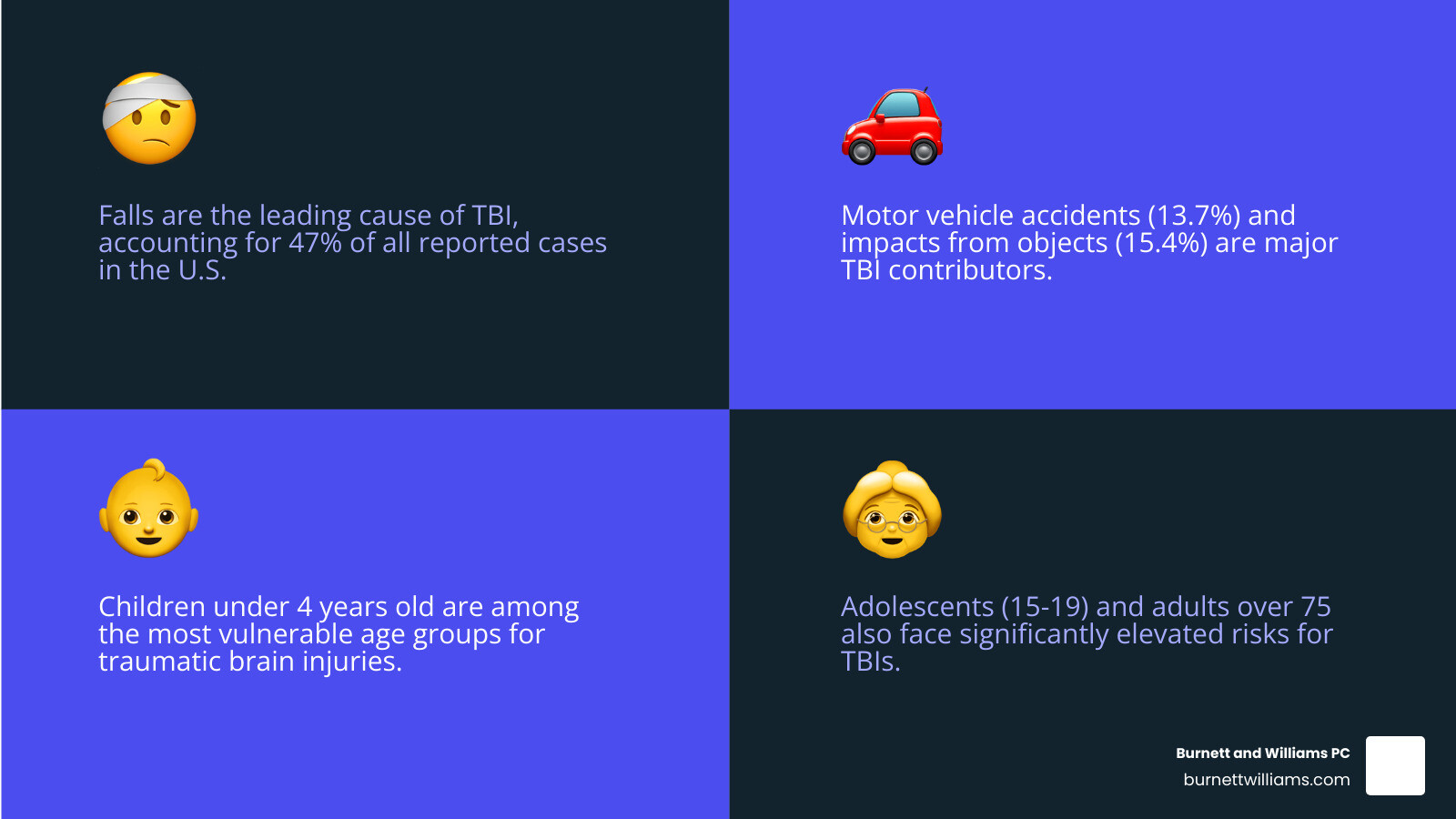
- Car accidents on I-95 or Route 7: Motor vehicle accidents remain a leading cause of TBIs. The sudden impact and whiplash can cause the brain to collide with the inside of the skull, leading to bruising, swelling, or even tearing of nerve fibers. Many of our clients have suffered TBIs from collisions on busy Virginia roadways like I-95 in Richmond, Route 7 in Leesburg, or Route 28 in Northern Virginia.
- Slip and falls: Falls, especially among the elderly, are another significant cause. These can happen anywhere, from a poorly maintained sidewalk in Leesburg to an unsafe retail environment in Fairfax County.
The symptoms of a TBI can be diverse and may not always appear immediately. It is crucial to seek medical attention after any head trauma, even if you feel fine at first. Here are some common categories of TBI symptoms:
- Physical symptoms: Persistent headaches, dizziness, fatigue, nausea, vomiting, blurred vision, sensitivity to light or sound, slurred speech, numbness or tingling, and seizures.
- Cognitive symptoms: Memory loss, difficulty concentrating, confusion, trouble with decision-making, slowed thinking, and problems with language or communication.
- Emotional symptoms: Mood swings, irritability, anxiety, depression, personality changes, and difficulty controlling emotions.
For more detailed information on recognizing these signs, you can find More on head injury symptoms.
The Long-Term Consequences of a Brain Injury
The aftermath of a TBI often extends far beyond the initial injury. For many, it means a lifelong impact, affecting every aspect of their existence. Victims may experience chronic pain, debilitating cognitive deficits, and significant personality changes that strain relationships and make everyday life challenging. The financial strain can be immense, with mounting medical bills and the inability to return to work.
We understand that a TBI can necessitate ongoing care, including specialized rehabilitation programs such as physical therapy, occupational therapy, and speech therapy. Some individuals may require vocational rehabilitation to adapt to new career paths or even lifelong attendant care.
To learn more about the lasting effects, you can Read about the long-term side effects of TBI.
Navigating the Legal Maze: Filing a TBI Claim in Virginia
Filing a TBI claim in Virginia involves specific legal requirements and a strict timeline. Understanding these is crucial for protecting your right to compensation.
Statute of Limitations
In Virginia, you generally have a limited time to file a personal injury lawsuit, including those involving a TBI. This deadline is known as the statute of limitations. For most personal injury cases in Virginia, including those involving brain injuries, you must file your lawsuit within two years from the date of the accident.
If you miss this deadline, you will likely lose your right to seek compensation, regardless of the severity of your injuries or the strength of your case. This is why immediate action is so important.
Proving Fault
To secure compensation for your TBI, we must prove that another party’s negligence or wrongful action caused your injury. This process involves meticulous evidence gathering, such as:
- Police reports: For car accidents, these reports provide initial details about the incident, contributing factors, and involved parties.
- Witness statements: Eyewitness accounts can corroborate the sequence of events and establish fault.
- Medical records: Comprehensive medical documentation from the moment of injury, through diagnosis, treatment, and rehabilitation, is vital to demonstrate the extent and causation of your TBI.
- Accident scene photos and videos: Visual evidence can be powerful in illustrating dangerous conditions or the circumstances of an accident.
Proving Negligence and Overcoming Virginia’s Contributory Negligence Rule
At the heart of most TBI claims is the concept of negligence. To prove negligence, we must establish four key elements:
- Duty of care: The at-fault party owed you a legal duty to act reasonably to prevent harm. For example, drivers on I-64 in Charlottesville have a duty to drive safely, and property owners in Winchester have a duty to maintain safe premises. You can find a detailed Explanation of duty of care.
- Breach of duty: The at-fault party failed to meet that duty of care. This could be a distracted driver, a property owner who ignored a hazard, or an employer who failed to provide proper safety equipment.
- Causation: The breach of duty directly caused your traumatic brain injury. We must demonstrate a clear link between their actions and your injury.
- Damages: You suffered actual losses as a result of your TBI.
Virginia’s Strict Contributory Negligence Rule: This is one of the most challenging aspects of personal injury law in our state. Virginia follows a pure contributory negligence rule. This means that if you are found to be even 1% at fault for the accident that caused your TBI, you are barred from recovering any compensation from the other party.
This strict rule makes the role of an experienced Traumatic brain injury attorney absolutely critical in Virginia. We work to ensure that fault is accurately assigned and that your right to recovery is protected.
The Critical Role of a Virginia Traumatic Brain Injury Attorney
Given the complexities of TBI cases and Virginia’s demanding legal landscape, the guidance of a skilled Traumatic brain injury attorney is indispensable. We provide comprehensive legal support and advocacy to TBI victims and their families. Our role includes:
- Legal guidance: We explain your rights and options in clear, understandable terms, helping you steer the intricate legal process.
- Case investigation: We carefully investigate the accident, gather crucial evidence, and identify all potentially liable parties.
- Protecting your rights: We act as your shield against aggressive insurance companies that often try to minimize your injuries or shift blame.
- Communicating with insurers: We handle all communications and negotiations with insurance adjusters, who are not on your side.
- Navigating Virginia law: We apply our deep knowledge of Virginia’s personal injury statutes, including the statute of limitations and contributory negligence rule, to build the strongest possible case.
For a more in-depth understanding of how a lawyer can assist, explore A complete guide from a brain injury lawyer.
How a Virginia Traumatic Brain Injury Attorney Builds Your Case for Maximum Compensation
Building a strong TBI case requires more than just legal expertise; it demands a collaborative approach and thorough understanding of both medical science and financial implications. Our firm focuses on a comprehensive strategy to ensure we secure maximum compensation available.
Case Strategy
We work diligently to build a robust case by:
-
Engaging expert witnesses: Because TBIs are complex, we often consult with a team of specialists. This includes neurologists and neuropsychologists who can explain the medical aspects of your injury, its prognosis, and its impact on your cognitive functions.
-
Thorough documentation: We gather all relevant medical records, therapy notes, employment history, and financial statements to paint a complete picture of your losses.
- Client-centered approach: We involve you and your family in every decision, ensuring your voice is heard and your needs are prioritized. We believe in treating you as an individual, not just a case file.
Calculating the Full Value of Your TBI Claim
Determining the true value of a TBI claim is a complex process. We carefully calculate both economic and non-economic damages to ensure you are fully compensated.
- Economic damages: These are quantifiable financial losses and expenses, including:
- Medical bills from emergency care to long-term rehabilitation.
- Future care costs, such as home health aides, specialized equipment, or modifications to your home.
- Lost wages from time missed at work due to your injury and recovery.
- Non-economic damages: These compensate for intangible losses that significantly impact your quality of life, such as:
- Pain and suffering, both physical and emotional.
- Loss of enjoyment of life, meaning the inability to participate in activities you once loved.
- Emotional distress, anxiety, depression, and other psychological impacts of your injury.
What to Look for When Choosing Your Legal Advocate
Selecting the right Traumatic brain injury attorney is one of the most important decisions you will make after a TBI. Here’s what to consider:
- Experience with Virginia TBI cases: Ensure the firm has a proven track record of handling complex brain injury claims specifically within Virginia’s legal system.
- Trial record: While many cases settle, a lawyer with a strong trial record signals to insurance companies that they are prepared to advocate for you in court if necessary.
- Client testimonials: Look for feedback that highlights responsive, caring client service and successful outcomes. Our clients consistently praise our dedication and personalized attention.
- Contingency fee basis: Most reputable TBI attorneys work on a contingency fee, meaning you pay no upfront legal fees. Their payment is a percentage of the compensation they secure for you.
- Responsive communication: You need a lawyer who keeps you informed, answers your questions promptly, and makes you feel supported throughout the process.
- A firm that treats you like a person, not a file: We pride ourselves on our empathetic approach, recognizing that you are going through an incredibly difficult time. We involve our clients in decision-making and treat each case with the individualized attention it deserves.
For guidance on finding the right legal representation, you can Find the best brain and spine injury attorney.
Frequently Asked Questions About TBI Lawsuits
We understand that you likely have many questions during such a challenging time. Here are answers to some common inquiries about TBI lawsuits in Virginia.
How much is my TBI case worth?
It is impossible to provide an exact figure without a thorough evaluation of your specific circumstances. Every TBI case is unique, and its value depends on numerous factors, including:
- The severity and permanence of your brain injury.
- The extent of your medical costs, including rehabilitation and long-term care.
- The amount of income you have lost.
- The impact of the injury on your quality of life, including pain, suffering, and emotional distress.
An experienced Traumatic brain injury attorney will conduct a detailed assessment of these factors to provide you with a realistic estimate and advocate for the maximum possible compensation. There is no guaranteed amount, but our goal is always to secure a recovery that fully accounts for all your losses.
How long will my brain injury lawsuit take?
TBI lawsuits are often complex and can take a significant amount of time to resolve. There is no set timeframe, as the duration depends on factors such as:
- The complexity of the accident investigation and evidence gathering.
- The severity of your injuries and the duration of your medical treatment and recovery.
- The willingness of the at-fault party and their insurance company to negotiate fairly.
- The potential need for litigation and a trial, which can extend the timeline.
While some cases may settle in a matter of months, others, especially those involving severe and long-term TBIs, can take several years to fully resolve. Patience is key, but rest assured, we work efficiently and diligently at every stage to move your case forward.
What does it cost to hire a TBI lawyer?
At Burnett & Williams PC, we understand that you may already be facing significant financial burdens due to your TBI. That’s why we offer our services on a contingency fee agreement. This means:
- No upfront costs: You do not pay any legal fees out of your own pocket to begin your case.
- Fees paid from settlement: Our attorney fees are only collected if we successfully obtain compensation for you, either through a settlement or a court verdict.
- No fee if you don’t win: If we do not secure a recovery for you, you owe us no attorney fee.
This arrangement ensures that you have access to high-quality legal representation, regardless of your current financial situation.
Contact a Virginia Brain Injury Lawyer Today
A traumatic brain injury can turn your world upside down, impacting not just the victim but their entire family.
At Burnett & Williams PC, we bring decades of experience to advocating for the rights of TBI victims across Virginia. With offices in Leesburg, Midlothian, Orange, Winchester, Culpeper, Hopewell, and Richmond, we are deeply committed to our communities and clients. We pride ourselves on our compassionate representation, responsive client service, and our unwavering dedication to helping you achieve justice. We believe in treating our clients like family, providing personalized attention and involving you in every step of the process.
Don’t face this overwhelming challenge alone. Contact us today for a free, no-obligation case evaluation. Let our experienced Traumatic brain injury attorney team shoulder the legal burden, allowing you to concentrate on what matters most: your healing and future well-being.