
Injured on Someone Else’s Property in Orange County?
If you were hurt by an unsafe condition on someone else’s property, an Orange premises liability attorney can help you find out who controlled the property, whether they knew or should have known about the hazard, and what evidence may support your claim. Get medical care, photograph the scene if you can, and report the injury. Virginia’s strict contributory negligence rule makes early evidence especially important: if your own negligence helped cause the accident, it may prevent you from recovering compensation.
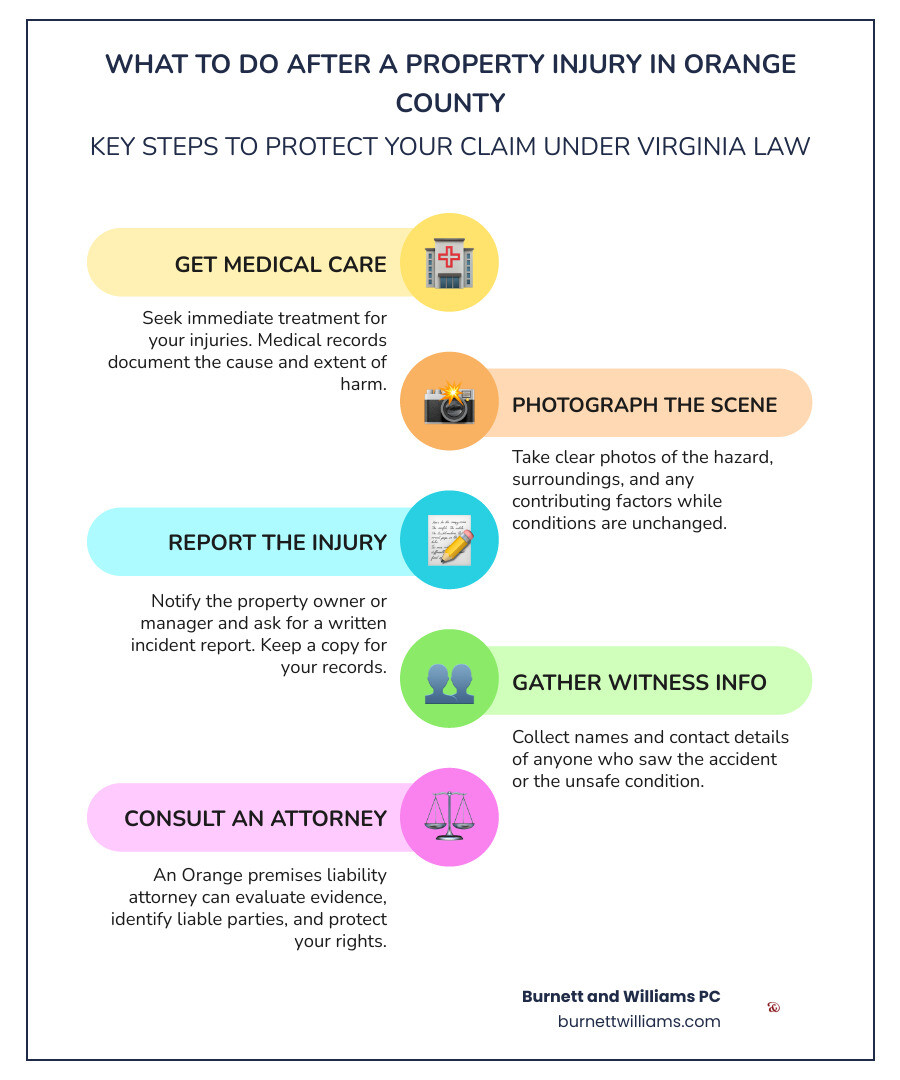
Our team handles every aspect of Orange personal injury claims. Working with a dedicated Orange accident lawyer helps you understand your legal options and how personal injury attorney fees work on a contingency basis.
Understanding Property Owner Duties Under Virginia Law
Under Virginia law, property owners and commercial operators owe a legal duty to maintain their premises in a reasonably safe condition for lawful visitors. This duty requires routine inspections, timely maintenance, and warning guests about hidden dangers that are not immediately obvious.
Whether an incident occurs at a shopping center, apartment complex, or private residence, understanding Virginia premises liability principles helps injured individuals determine accountability. Residential landlords and commercial businesses share the responsibility to prevent foreseeable safety hazards, such as slick entryways, broken steps, or falling debris.

Visitor Classifications and Legal Status
Virginia premises liability law categorizes visitors into distinct classes, each receiving a different standard of legal protection:
- Invitees: Customers and business patrons invited for the owner’s financial benefit. Owners owe invitees the highest standard of care, including regular inspections to discover and fix hazards.
- Licensees: Social guests visiting with permission for non-commercial purposes. Owners must warn licensees about known hidden dangers they might not discover themselves.
- Trespassers: Individuals entering property without permission. Landowners generally owe no duty to keep land safe for adult trespassers, though intentional harm is prohibited and special safety rules protect young children drawn to dangerous features.
| Visitor Status | Reason for Visit | Level of Duty Owed by Property Owner |
|---|---|---|
| Invitee | Business patron, retail customer | Highest: Duty to inspect, repair, and warn of hidden hazards |
| Licensee | Social guest, friendly visitor | Moderate: Duty to warn of known hidden dangerous conditions |
| Trespasser | Uninvited, unauthorized person | Minimal: No duty to inspect, cannot cause intentional harm |
Proving Property Owner Notice and Negligence
To establish negligence, an injured party must prove that the property owner had notice of the hazard before the accident occurred. Notice can be established in two ways:
- Actual Notice: The owner, landlord, or store employee created the dangerous condition or had direct knowledge of it prior to the incident.
- Constructive Notice: The unsafe hazard existed for a long enough period that a prudent owner conducting routine maintenance would have discovered and fixed it.
Demonstrating constructive notice requires thorough evidence, including facility inspection logs, cleaning schedules, and surveillance footage showing the duration of the danger.
Common Types of Property Accidents in Orange County
Premises hazards occur across retail outlets, residential rentals, and public spaces throughout Central Virginia. Neglected property maintenance frequently leads to severe physical harm, including fractures, spinal trauma, and traumatic brain injury risks.
Understanding local hazards and reviewing an Orange Virginia injury guide helps victims recognize when an owner’s neglect caused their injuries.
Slip, Trip, and Fall Hazards
Slip and fall incidents represent a major portion of premises claims. Property owners must proactively address:
- Wet or freshly mopped retail aisles without warning cones
- Rainwater accumulation inside commercial entryways
- Uneven pavement, broken concrete sidewalks, and loose carpeting
- Damaged steps, missing handrails, or sudden elevation changes
Our comprehensive slip and fall complete guide outlines how these hazards cause long-term harm, while analyzing factors that dictate a fair slip and fall settlement.
Inadequate Security and Structural Failures
Beyond surface falls, severe injuries happen when physical infrastructure collapses or security measures fail. Structural defects like rotting deck boards, broken stairway railings, and falling retail merchandise pose extreme dangers.
Commercial properties like apartment complexes, hotels, and parking structures also have an obligation to provide adequate security. Inadequate exterior lighting, broken security gates, and defective door locks can expose lawful visitors to preventable criminal assaults.
Why You Need an Orange Premises Liability Attorney
Premises liability claims present complex legal hurdles. Commercial insurance carriers act quickly to deny claims, often asserting that the hazard was open and obvious or that the injured person failed to watch where they were walking.
An Orange premises liability attorney protects your legal rights by handling aggressive insurance adjusters and conducting a prompt case evaluation. Whether analyzing property impacts or retail falls, experienced counsel provides crucial advocacy. If a wrongful death incident occurs in a neighboring state, our firm will find trusted co-counsel in that jurisdiction to assist.
How an Orange Premises Liability Attorney Establishes Fault
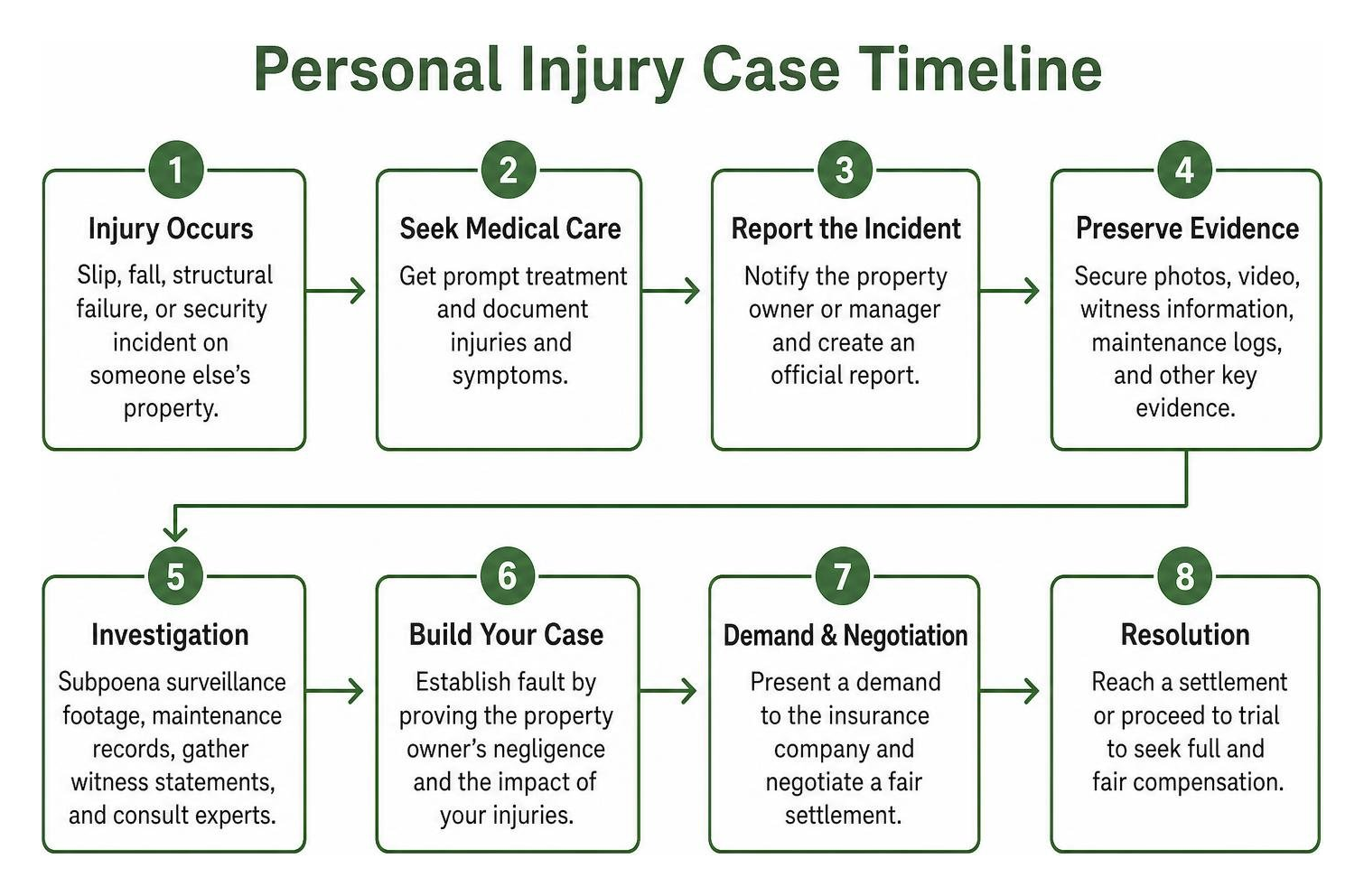
Proving fault requires immediate, meticulous investigation before evidence disappears or security footage gets erased. Legal representation secures critical evidence by:
- Subpoenaing surveillance camera recordings and internal maintenance logs
- Gathering eyewitness statements and employee shift reports
- Consulting engineering and safety experts to analyze building code compliance
- Working with medical professionals to document the lifetime impact of traumatic brain injuries and orthopedic trauma
Partnering with an Orange Premises Liability Attorney Early
Retaining legal counsel immediately after an injury ensures that critical evidence is preserved. Early investigation establishes a strong foundation for settlement negotiations, showing insurance carriers that your case is prepared for trial if necessary.
Our team at Burnett & Williams PC communicates directly with insurers, shields you from high-pressure tactics, and guides you through every decision from discovery to resolution.
Virginia Negligence Rules and Claim Timelines
Virginia tort law applies strict procedural standards that directly impact premises liability claims.
Under Virginia’s strict contributory negligence standard, if an injured person is found to share even one percent of the fault for an accident, they are completely barred from recovering compensation. Defense attorneys frequently attempt to use this rule to avoid financial accountability. In cases involving fatal injuries, families may seek justice through wrongful death claims subject to the same strict standards.
Navigating Strict Contributory Negligence Defenses
To defeat contributory negligence defenses, your legal team must prove that you exercised ordinary care and that the dangerous condition was not open and obvious. Detailed medical records, prompt site photographs, and expert testimony play a decisive role in demonstrating that the property owner holds full responsibility. Knowing how to handle a premises liability claim in Fairfax or Central Virginia requires a tailored strategy built on concrete facts.
Calculating Economic and Non-Economic Damages
Catastrophic premises injuries impose enormous financial and emotional strains. A thorough claim accounts for losses:
- Economic Damages: Emergency medical bills, surgical costs, physical therapy, prescription medications, lost wages, and diminished future earning capacity.
- Non-Economic Damages: Physical pain, emotional distress, physical impairment, and loss of quality of life.
Frequently Asked Questions About Premises Liability in Orange County
What is the statute of limitations for a premises liability claim in Virginia?
In Virginia, the statute of limitations for filing a personal injury or wrongful death lawsuit is two years from the date of the injury.
Can I still recover damages if the property owner claims I was partially at fault?
Virginia strictly enforces the contributory negligence doctrine. If the defense proves that your own negligence contributed in any way to your injury, you cannot recover compensation. An attorney works to dismantle these allegations by establishing that the hazard was hidden and that you acted reasonably.
What evidence is most critical immediately after a property accident?
The most critical evidence includes high-resolution photographs of the hazard from multiple angles, written incident reports filed with property management, contact details of any eyewitnesses, and prompt medical records linking your injuries directly to the incident.
Conclusion
A serious injury on dangerous property can upend your physical health, your family life, and your financial security. Because Virginia’s strict legal standards place a heavy burden of proof on injured visitors, taking immediate legal action is essential. At Burnett & Williams PC, our personal injury lawyers are known for responsive, caring client service and involving clients in decision-making every step of the way. If you or a loved one suffered harm due to a negligent property owner, schedule a free consultation with our Orange legal team today to protect your rights.