
What You Need to Know About a Premises Liability Attorney in Fairfax
If you are searching for a premises liability attorney in Fairfax, here is what matters most:
Quick answers:
- What is it? Premises liability is when a property owner’s failure to keep their property safe causes you to get hurt.
- Who can file? Anyone injured on someone else’s property in Fairfax County or Northern Virginia may have a claim.
- What can you recover? Medical bills, lost wages, pain and suffering, and more.
- How long do you have? Virginia gives you two years from the date of injury to file a lawsuit.
- Key Virginia rule: Virginia follows a strict contributory negligence standard. If you are found even slightly at fault, you may lose your right to recover. An experienced attorney is critical.
Getting hurt on someone else’s property is disorienting. One moment you are shopping at a Fairfax mall, walking through an apartment parking lot off Route 29, or visiting a neighbor, and the next you are dealing with pain, medical bills, and missed work.
Property owners in Virginia are legally required to keep their premises reasonably safe. When they fail, you have rights. Virginia’s laws, especially its strict contributory negligence rule, make these cases harder to win without the right legal help.
Burnett & Williams PC helps injured people in Fairfax County and throughout Northern Virginia understand those rights.
This guide walks you through everything you need to know, from how Virginia premises liability law works, to what steps to take right after an injury, to what your case may be worth.
Understanding Premises Liability in Fairfax County
When we talk about Virginia Premises Liability, we are referring to the legal responsibility that property owners, managers, and tenants have to maintain a safe environment for visitors. Whether you are at a local landmark like the Fair Oaks Mall, a restaurant in Fairfax Corner, or a private residence in Oakton, the person in charge of that property must ensure it is free from hazardous conditions.
A hazardous condition isn’t just a wet floor. It could be a broken handrail in an apartment building, poor lighting in a parking garage near the Fairfax County Courthouse, or an unmarked obstacle in a walkway. Under Virginia law, if an owner knows about a danger, or should have known about it through reasonable inspection, and fails to fix it or warn you, they may be held responsible for your injuries.
The Role of a Premises Liability Attorney in Fairfax
Navigating these claims alone is difficult. A premises liability attorney in Fairfax acts as your advocate, handling the heavy lifting so you can focus on recovery. Our role involves:
- Investigation: We dig deep to find out why the accident happened. Did the owner skip a required inspection? Was there a history of similar accidents?
- Evidence Gathering: We secure surveillance footage from local businesses, interview witnesses, and obtain maintenance logs that property owners might otherwise “lose.”
- Insurance Negotiation: Insurance companies often try to settle for as little as possible. We know their tactics and push for a settlement that reflects the true cost of your injury.
- Legal Strategy: Every case is unique. We develop a strategy tailored to the specific facts of your accident and the local procedures of the Fairfax County Circuit Court.
- Case Valuation: We help you understand exactly what your case is worth by calculating both current and future medical needs, lost income, and the impact on your quality of life.
Visitor Status and the Duty of Care under Virginia Law
One of the most unique aspects of Premises Injury Virginia law is that the level of protection, or duty of care, you are owed depends on why you were on the property. Virginia divides visitors into three main categories:
| Visitor Status | Definition | Duty Owed by Property Owner |
|---|---|---|
| Invitee | Someone invited for business (e.g., a shopper or a hired contractor). | Highest duty: Must inspect the property, fix hazards, and warn of dangers. |
| Licensee | A social guest invited for non-business reasons. | Must fix known risks and warn of non-obvious defects they are aware of. |
| Trespasser | Someone on the property without permission. | Lowest duty: Generally, the owner just cannot intentionally harm them. |
For invitees, such as someone visiting a grocery store off Route 50, the owner has an active duty to conduct reasonable inspections. They cannot simply say, “I didn’t know the floor was wet.” If the spill was there long enough that a reasonable person would have found it, the law treats it as if they knew.
Common Hazards and Property Owner Negligence in Northern Virginia
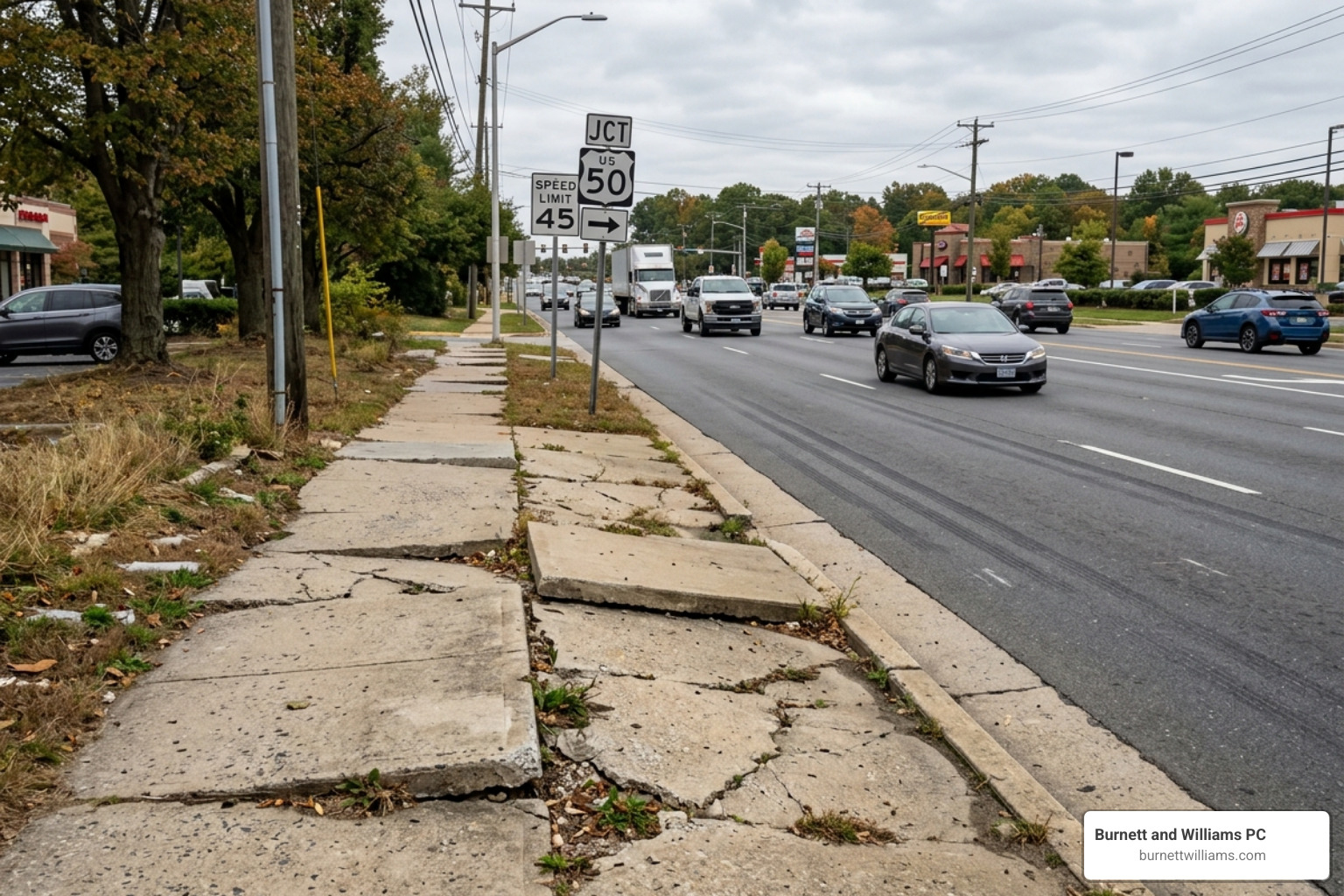
Negligence takes many forms. While a Slip and Fall is the most frequent type of claim, many other hazards lead to serious injury in Fairfax.
- Negligent Security: If a parking lot near a busy nightlife area has poor lighting or a history of crime and the owner fails to provide security, they may be liable for assaults that occur on the property.
- Swimming Pools: Both residential and public pools must follow strict Pool Safety guidelines. Lack of fencing or proper signage can lead to tragic drowning incidents.
- Dog Bites: If a property owner fails to restrain a dangerous animal, they can be held responsible for the resulting injuries.
- Building Code Violations: Uneven ramps, stairs without handrails, or faulty wiring often violate Fairfax County building codes, which is strong evidence of negligence.
- Hidden Dangers: We have seen cases involving unmarked cables strung across roads, creating a public nuisance, or faulty golf course designs that lead to permanent disability. Even storm water retention ponds can be grounds for a claim if they are not properly fenced or marked.
Overcoming Virginia’s Contributory Negligence Rule
Virginia is one of the few places that still uses the strict “contributory negligence” rule. This means that if you are found to be even 1 percent at fault for your accident, you are legally barred from recovering any compensation. This is the biggest hurdle in any Slip and Fall Premises Injury Whos At Fault case.
Property owners and their insurance companies will almost always try to blame you. They might argue you weren’t looking where you were walking or that the hazard was “open and obvious.” We may use the Clear Paths Doctrine. This Virginia legal concept can help if a victim had no other safe way to traverse a path, such as an icy apartment walkway where the owner failed to provide a clear alternative.
Proving Negligence with a Premises Liability Attorney in Fairfax
To win, we must prove the property owner’s negligence was the sole cause of your injury. We do this by compiling:
- Surveillance Footage: Capturing the moment of the fall or the duration a hazard was left unaddressed.
- Witness Statements: Corroborating your account of the events.
- Maintenance Logs: Showing a pattern of neglect or a failure to follow safety protocols.
- Expert Testimony: Using engineers or safety experts to explain why a condition was dangerous.
- Accident Reconstruction: Visually demonstrating how the injury occurred to a jury or insurance adjuster.
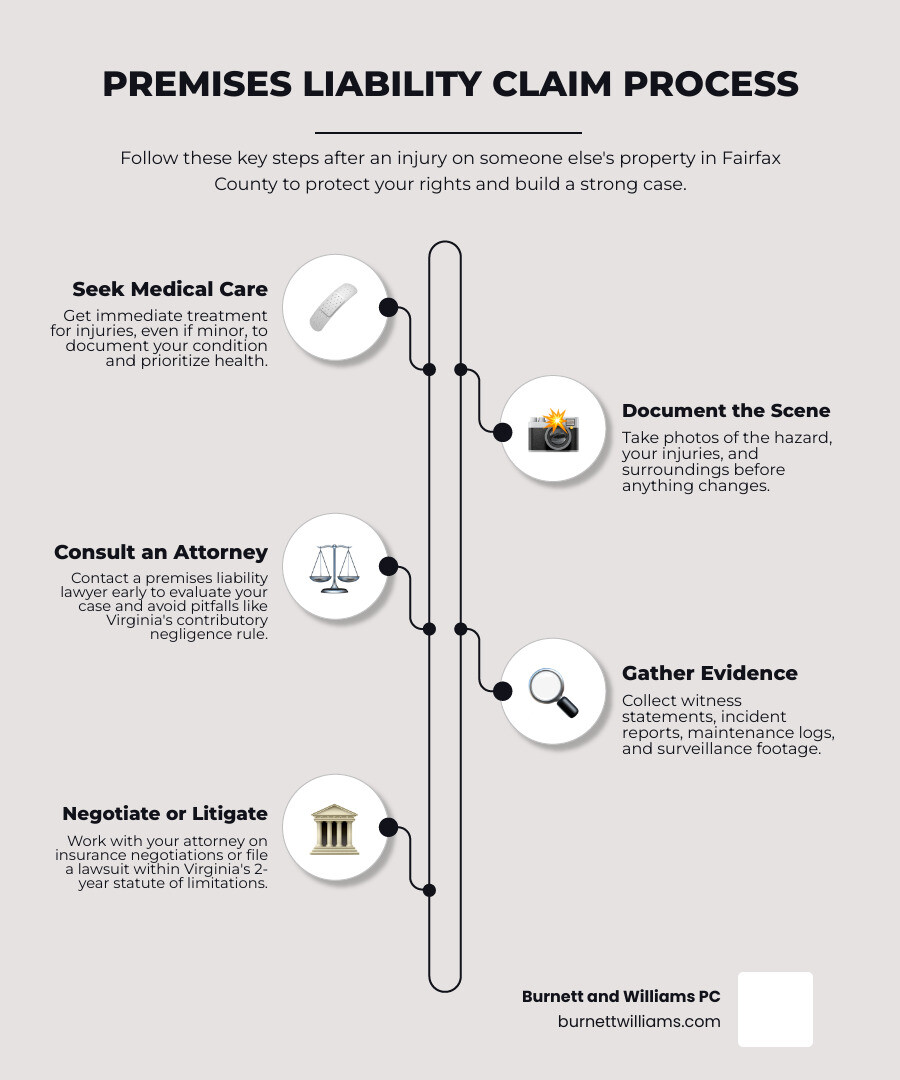
Steps to Take After an Injury on Someone Else’s Property
If you are injured, the actions you take in the first few hours and days are critical. Our Northern Virginia Slip And Fall Injury Lawyers recommend the following:
- Seek Medical Care Immediately: Your health is the priority. Whether you go to Inova Fairfax Hospital or a local urgent care, getting a medical record of your injuries is vital evidence.
- Report the Incident: Tell the property manager or owner what happened. Ask for a copy of the incident report, but do not sign anything that admits fault.
- Preserve Evidence: If you can, take photos and videos of the hazard (the spill, the ice, the broken step) and the surrounding area.
- Identify Witnesses: Get names and contact information for anyone who saw what happened.
- Avoid Recorded Statements: Do not give a recorded statement to the property owner’s insurance company without talking to an attorney first. They are looking for reasons to use the contributory negligence rule against you.
Seeking Compensation for Your Injuries
The goal of a Slip and Fall Settlement is to make you “whole” again. While no amount of money can undo the pain, it can provide the financial security needed to move forward. Compensation typically covers:
- Medical Bills: Past, present, and potentially future treatments.
- Lost Wages: Income lost while you were unable to work.
- Pain and Suffering: Compensation for the physical and emotional toll.
- Permanent Disability: For life-altering injuries that prevent you from returning to your previous life.
- Wrongful Death: For families who have lost a loved one due to property negligence.
Virginia has a two-year statute of limitations for personal injury claims. This means you generally have exactly two years from the date of the accident to file a lawsuit in court. If you miss this deadline, you lose your right to seek compensation forever.
The impact of these cases can be significant. In Virginia, settlements and verdicts for premises liability have reached substantial amounts, such as a $15 million settlement for a drowning victim requiring lifetime care, a $7.5 million settlement for permanent disability due to faulty design, and $1 million for a death caused by an unmarked cable.
Why You Need a Local Premises Liability Attorney in Fairfax
Choosing Burnett & Williams PC means choosing a firm that knows Northern Virginia inside and out. We aren’t just familiar with the law: we are familiar with the community.
Our approach is built on responsive, caring service. We involve our clients in every major decision, ensuring you never feel like just another case number. Whether we are negotiating with an insurance adjuster or preparing for trial, our goal is to provide personalized advocacy.
Frequently Asked Questions about Fairfax Premises Liability
How do I know if I have a valid premises liability case in Fairfax?
A valid case generally requires three things: the property owner owed you a duty of care, they breached that duty by allowing a dangerous condition to exist, and that breach directly caused your injury. If you were a lawful visitor and the owner should have known about the danger, you likely have a claim.
How long do I have to file a premises liability lawsuit in Virginia?
Virginia has a two-year statute of limitations for personal injury claims. It is best to contact an attorney much sooner, however, as evidence like surveillance footage can be deleted in as little as 24 or 48 hours.
Can I still recover compensation if the property owner denies responsibility?
Yes. It is very common for property owners and insurance companies to deny responsibility initially. We conduct independent investigations to uncover the truth and present the evidence necessary to hold them accountable.
Conclusion
Handling a property injury claim in Northern Virginia requires a deep understanding of local laws and a commitment to thorough advocacy. From the strict contributory negligence rule to the two-year filing deadline, the stakes are high.
If you have been injured, don’t face the insurance companies alone. Working with a premises liability attorney ensures that your rights are protected and that you have the best possible chance at securing the fair compensation. At Burnett & Williams PC, we are proud to serve the Fairfax community with the expertise and compassion needed to win complex cases.
For more information about how we can help, explore our Northern Virginia personal injury services or contact us today to discuss your case.