
Understanding Your Rights After an Accident in Virginia
If you’re searching for a personal injury attorney in Virginia, you likely need help after an accident caused by someone else’s negligence. Here’s what you need to know.
Quick Guide to Finding a Virginia Personal Injury Attorney:
- Free Consultation: Most Virginia personal injury lawyers offer no-obligation consultations to evaluate your case.
- No Upfront Fees: Attorneys typically work on contingency, meaning you do not pay an attorney fee unless you win.
- Two-Year Deadline: Virginia law gives you two years from your accident date to file a claim.
- Virginia’s Strict Rules: Being even 1% at fault can prevent you from recovering any compensation.
- Types of Cases: Car accidents, truck crashes, slip and falls, dog bites, wrongful death, and workplace injuries.
Being injured in an accident is overwhelming. You’re dealing with medical bills, lost wages, and physical pain. You shouldn’t have to face it alone. Virginia personal injury law gives you the right to seek compensation when someone else’s carelessness causes you harm.
The challenge is that Virginia has some of the strictest personal injury laws in the country. Insurance companies know this and will use tactics to minimize what they pay you. Working with an experienced Virginia personal injury attorney can make the difference between a low settlement and fair compensation.
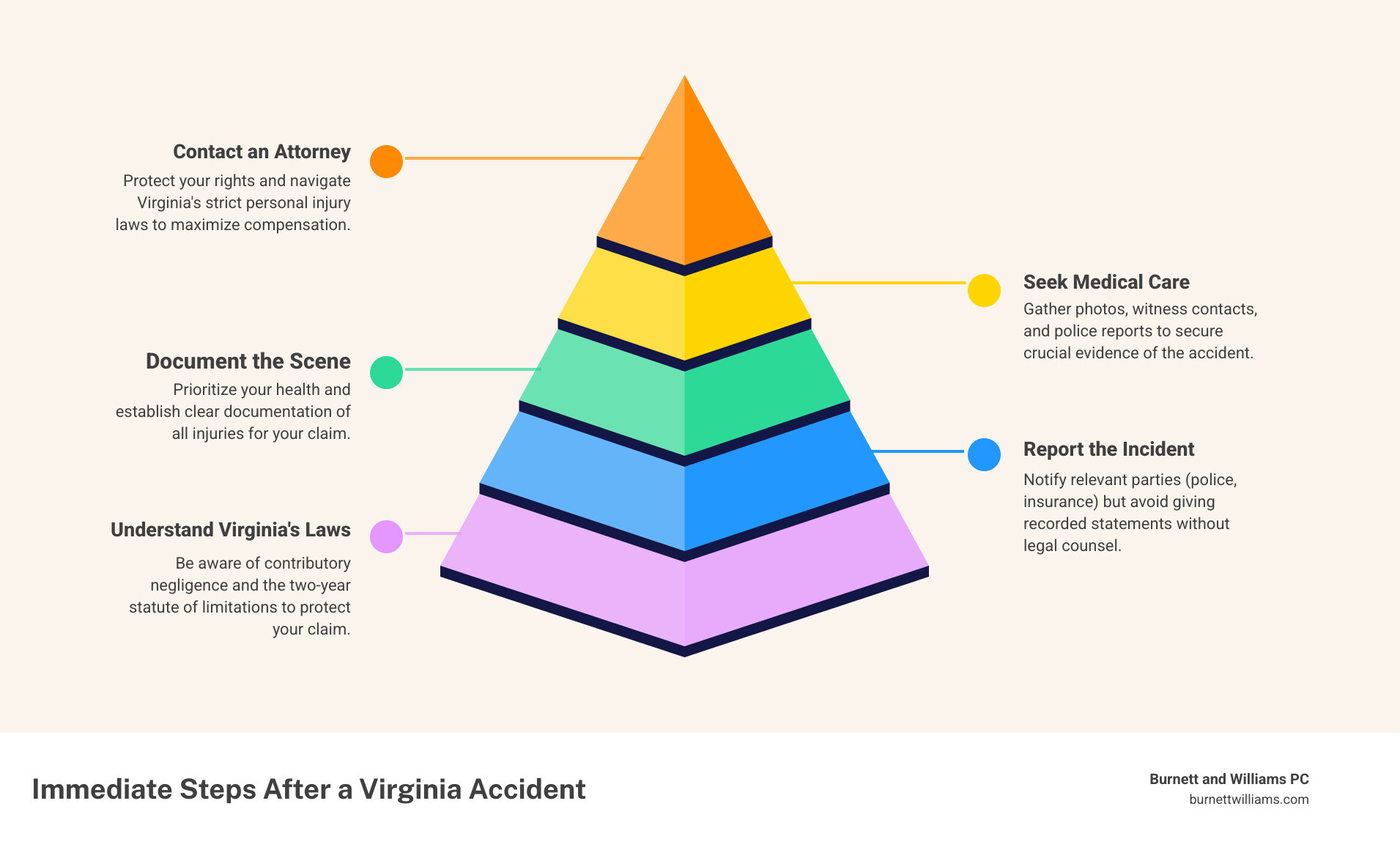
Explore more about Personal injury attorney Virginia:
Common Personal Injury Cases We Handle in Virginia
Personal injury law protects individuals who have suffered harm due to the negligence of another party. Our team helps clients navigate these complex situations.
Common types of personal injury cases in Virginia include:
- Car Accidents: A leading cause of personal injury claims, car accidents are frequent on Virginia roadways like I-64 or Route 522. In 2022, Virginia saw over 122,000 traffic crashes, with many resulting in injuries or fatalities.
- Truck Accidents: Accidents involving commercial trucks often result in severe injuries. These cases can be complex, involving federal regulations and multiple liable parties.
- Motorcycle Accidents: Motorcyclists are vulnerable on the road. We often see cases where other drivers fail to see motorcycles, leading to serious injuries.
- Premises Liability (Slip and Falls): Property owners must maintain safe environments. When they fail, and someone is injured in a slip and fall, a premises liability claim may arise.
- Dog Bites: Virginia law holds dog owners responsible for injuries their animals inflict.
- Wrongful Death: When negligence results in a death, surviving family members may pursue a wrongful death claim to seek compensation for their loss.
- Workplace Injuries: Accidents can happen on the job. We help injured workers with third-party personal injury claims.
Proving Fault: The Critical Role of Negligence in Virginia Law
Proving fault is a critical part of any personal injury case in Virginia. This involves demonstrating negligence, which means showing that another party acted carelessly and caused your injuries. To prove negligence, we must establish four elements:
- Duty of Care: The at-fault party owed you a legal duty to act reasonably to prevent harm. For example, all drivers owe others a duty to operate their vehicles safely.
- Breach of Duty: The at-fault party failed to uphold their duty. This could be a driver texting, a store owner not cleaning a spill, or a dog owner letting their dog roam free.
- Causation: The breach of duty directly caused your injuries. There must be a clear link between the careless action and the harm you suffered.
- Damages: You suffered actual losses, such as medical bills, lost wages, or pain and suffering.
A critical aspect of Virginia law is its strict contributory negligence rule. This rule states that if you are found to be even 1 percent at fault for an accident, you are barred from recovering any compensation. Insurance companies often use this rule to deny claims, making an experienced personal injury attorney Virginia essential to protect your right to recovery.
What Compensation Can You Recover in a Virginia Personal Injury Case?
If you were injured due to someone else’s negligence in Virginia, you can seek compensation for your losses. These damages fall into several categories:
-
Economic Damages: These are financial losses proven with receipts and pay stubs. They include all medical bills (past and future), lost wages from being unable to work, and property damage costs. If your future earning ability is affected, you can also seek compensation for that loss.
-
Non-Economic Damages: These damages compensate you for intangible losses that impact your quality of life, often called “pain and suffering.” This category includes physical pain, emotional distress like anxiety or depression, and the general inconvenience and disruption to your life.
-
Punitive Damages: In rare cases involving extreme negligence or intentional harm, Virginia courts may award punitive damages. These are not to compensate you but to punish the at-fault party and deter similar future conduct.
An insurance company’s goal is to minimize your payout. A skilled personal injury attorney Virginia is crucial to accurately assess and advocate for fair compensation for your losses.
How a Personal Injury Attorney in Virginia Can Guide You
Navigating the legal process after an injury can be an uphill battle. A Virginia personal injury lawyer can take on this burden, allowing you to focus on recovery.
How We Guide You
- Investigation and Evidence: We gather all evidence, including police reports, witness statements, and medical records. We may work with experts to build a strong case that proves the other party’s negligence.
- Dealing with Insurance Companies: Insurance adjusters aim to pay as little as possible. We handle all communications, protecting you from tactics designed to weaken your claim.
- Valuing Your Claim: We calculate the approximate value of your claim by considering all economic and non-economic damages, including future medical needs and lost earning potential.
- Meeting Deadlines: Virginia has a strict two-year deadline to file a personal injury lawsuit. Missing this deadline means losing your right to seek compensation. We ensure all paperwork is filed correctly and on time.
Choosing the Right Attorney
When choosing a personal injury attorney in Virginia, look for a firm with experience in Virginia courts and a focus on personal injury law. A strong track record and positive client reviews are also important indicators. You need an advocate who prioritizes your needs, communicates clearly, and operates on a client-focused basis.
Our Process and Fees
We work on a contingency fee basis, which means you pay no upfront fees. We only get paid an attorney fee if we win your case. The process begins with a free consultation to evaluate your case and answer your questions. If we move forward, we handle the investigation, negotiations, and all legal filings. While most cases settle, we prepare every case for trial to ensure we are ready to represent you in court if a fair settlement isn’t offered.
Frequently Asked Questions About Virginia Personal Injury Claims
Here are answers to common questions about Virginia personal injury claims.
How much is my Virginia personal injury case worth?
A case’s value depends on injury severity, clarity of fault, and insurance coverage. Because of Virginia’s strict contributory negligence rule, proving the other party was entirely at fault is critical. Online calculators are unreliable; a professional evaluation from a personal injury attorney Virginia is the only way to determine a realistic value for your claim.
Do I have to go to court?
Most personal injury cases settle through negotiations and never go to court. We always aim for a fair settlement first. However, we prepare every case for trial. This approach shows insurance companies we are serious and often leads to better offers. If not, we are ready to represent you in court.
What if the at-fault driver has no insurance?
If the at-fault driver is uninsured, your own auto insurance policy may provide a solution. Uninsured/Underinsured Motorist (UM/UIM) coverage is designed for this exact situation. It can compensate you for your injuries and losses. We can review your policy to see how this coverage applies to your case.
Take the First Step: Schedule Your Free Consultation
Acting quickly is crucial after a personal injury in Virginia. The state’s strict contributory negligence rule and two-year statute of limitations mean that delays can jeopardize your right to compensation.
We offer a free, no-obligation consultation to discuss your case. This is your chance to speak with an experienced personal injury attorney Virginia who can evaluate your situation and explain your rights without any upfront cost. The team at Burnett & Williams PC is ready to provide the clear, professional guidance you need. Let us put our experience to work for you.