
Understanding Your Path to Fair Compensation in Virginia
When you’re dealing with an injury claim settlement after an accident, the process can feel overwhelming while you’re already managing pain, medical appointments, and mounting bills. An injury claim settlement is simply an agreement between you and the at-fault party’s insurance company to resolve your claim for a specific dollar amount, avoiding the need for a lengthy court trial.
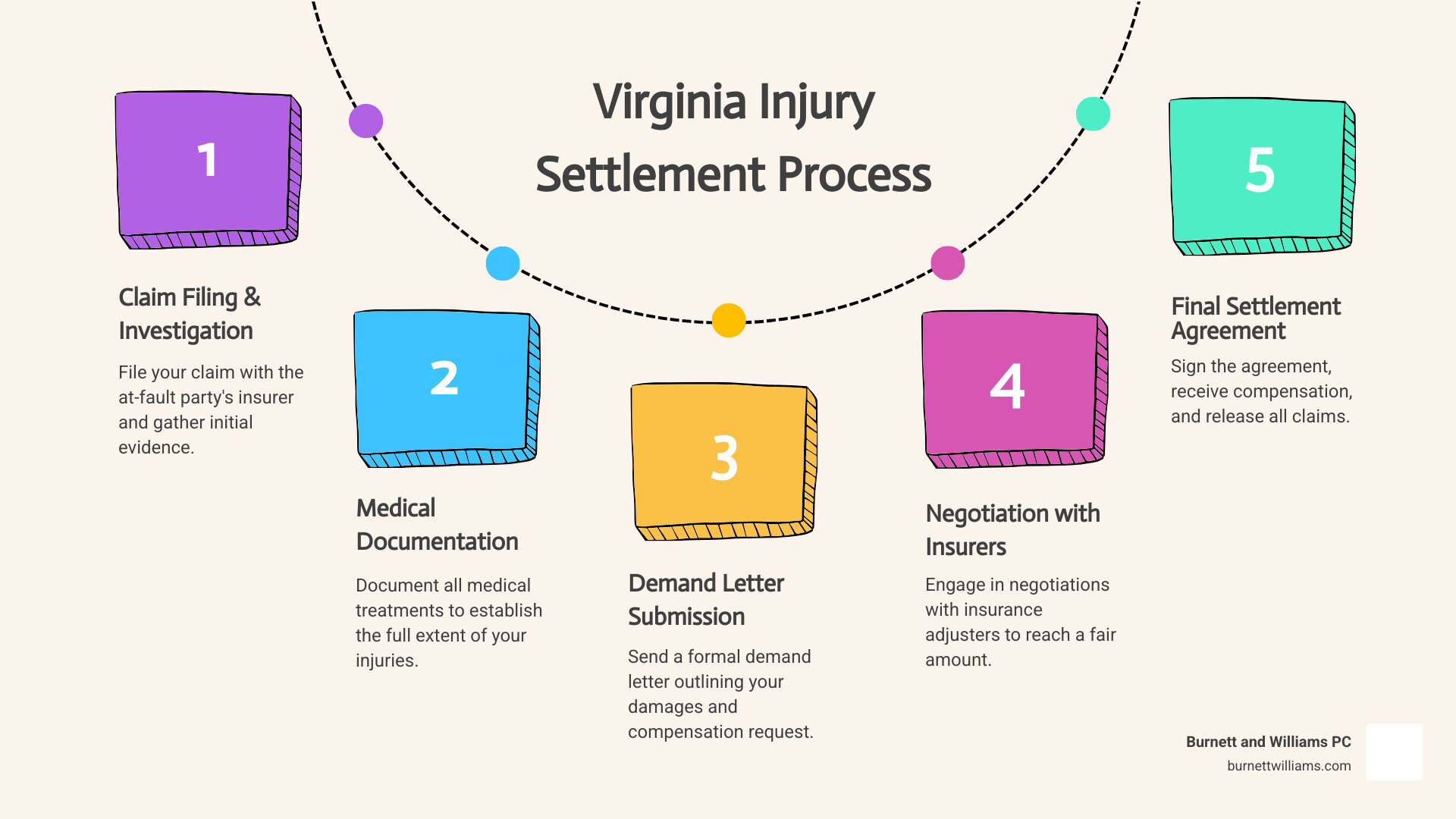
Here’s what the injury claim settlement process typically involves:
- Initial claim filing with the at-fault party’s insurance company
- Investigation phase where evidence is gathered and reviewed
- Medical treatment documentation to establish the full extent of your injuries
- Demand letter outlining your damages and compensation request
- Negotiation period with insurance adjusters to reach a fair amount
- Final settlement agreement and release of claims
Most personal injury cases in Virginia settle out of court. Research shows that approximately 95% of personal injury lawsuits settle before going to trial, making the settlement process the most likely path to compensation for your injuries.
In Virginia, understanding your rights is especially critical because of the state’s strict contributory negligence rule. Under this rule, if you are found even 1% at fault for your accident, you could be barred from recovering any compensation at all. This makes having experienced legal guidance particularly important when navigating your claim.
The settlement process in Virginia typically takes anywhere from a few months to over a year, depending on the complexity of your case and the severity of your injuries. Factors that influence your settlement timeline include:
- Ongoing medical treatment needs
- Disputes over who was at fault
- Insurance company cooperation
- Complexity of your injuries and damages
Understanding the Components of a Virginia Injury Claim
When we talk about an injury claim settlement, we’re looking at how you can be compensated for all the ways an accident has affected your life. This includes not only the costs you can easily put a price tag on, but also the more personal and sometimes hidden impacts. We often divide these into two main types: special damages and general damages.

What Are Special and General Damages?
Special damages, also known as economic damages, cover the direct financial losses from your injury. These are usually easy to calculate because they come with bills, receipts, or clear records. For example, they include medical bills, which can cover everything from emergency room visits and ambulance rides to surgeries, physical therapy, and even future medical care you might need. It’s really important to keep good records of all these expenses.
Special damages also include lost wages. If your injuries kept you from working, you can claim the income you missed out on. This can also cover any future lost earning capacity if your injuries will permanently affect your ability to work or earn money at the same level as before. And for vehicle accidents, property damage is also a special damage, covering the cost to fix or replace your car.
On the other hand, general damages, also called non-economic damages, make up for the emotional and psychological impact of your injury. These are harder to put a specific dollar amount on because they don’t come with a bill. However, they are very real and can deeply affect your life. This includes pain and suffering, which accounts for the physical pain you experience because of your injuries. It also covers emotional distress, like anxiety, depression, or other mental anguish that results from the accident. Finally, loss of enjoyment of life refers to when you can no longer do the activities you once loved, like hobbies, sports, or spending time with family, because of your injuries.
Common Types of Personal Injury Claims
At Burnett & Williams PC, we help people with a wide variety of personal injury claims across Virginia. While every case is unique, they generally fit into a few common categories:
Many claims come from car accidents. These are some of the most frequent cases we see, often involving injuries caused by reckless or negligent drivers on Virginia roads, whether it’s on a busy highway like I-81 or a local street in your hometown. You can learn more about how we help with these cases on our Vehicle Accidents page.
Collisions involving large commercial truck accidents can be especially devastating due to the immense size and weight of these vehicles. Our team has a lot of experience handling these complex cases. Find more about our services from our Virginia Tractor-Trailer Truck Accident Lawyers.
Premises liability, often known as slip and fall cases, happens when you get hurt on someone else’s property because of unsafe conditions. This could be a wet floor without a warning sign in a store or an unmarked hazard in a parking lot. Find out more about Slip and Fall Premises Injury: Who’s At Fault?.
When healthcare professionals don’t provide the accepted standard of care and it causes harm, it can lead to a medical malpractice claim. This can be a very complex area of law, as discussed by Peter Burnett on Medical Malpractice.
And sadly, some accidents result in fatalities. In these heartbreaking situations, the family of the person who passed away may be able to pursue wrongful death claims. These claims seek to recover damages for the profound loss and suffering the family experiences.
Key Factors That Determine Your Injury Claim Settlement Value
The value of your injury claim settlement isn’t pulled from thin air or calculated by some mysterious formula. Instead, it’s based on several concrete factors that are unique to your specific situation and circumstances in Virginia.

The severity of your injuries plays the biggest role in determining your settlement value. A broken wrist that heals in six weeks will naturally result in a smaller settlement than a spinal cord injury requiring years of treatment. Insurance companies and juries look closely at how long your medical treatment duration lasted, because longer treatment periods typically indicate more serious injuries.
Your long-term prognosis is equally important. If your doctor says you’ll make a full recovery, that’s different from being told you’ll need ongoing physical therapy or may never return to your previous level of function. Permanent disabilities or chronic conditions significantly increase settlement values because they affect your entire future.
The impact on your daily life matters tremendously. Can you still play with your children? Drive yourself to work? Sleep through the night without pain? These everyday activities that many of us take for granted become crucial factors when calculating what fair compensation looks like.
Strong evidence can make or break your case. Clear photos of the accident scene, detailed medical records, witness statements, and police reports all help prove both fault and the extent of your damages. Without solid evidence, even the most serious injuries can result in disappointing settlements.
Insurance policy limits create a ceiling on your potential recovery. Even if your damages total $500,000, you can’t collect more than the at-fault party’s policy limits unless other sources of recovery exist. This is why understanding all available insurance coverage becomes so important in serious injury cases.
The Critical Role of Contributory Negligence in Virginia
Virginia’s contributory negligence rule is a critical factor affecting your injury claim settlement. This rule states that if you’re found to be even 1% at fault for your accident, you’re completely barred from recovering any compensation at all.
Let me give you a real-world example. Imagine you’re driving through downtown Winchester and another driver runs a red light, slamming into your car. But you were going 5 mph over the speed limit. Under Virginia’s strict rule, an insurance company could argue that your slight speeding contributed to the accident, potentially eliminating your right to any compensation whatsoever.
This makes proving the other party was 100% at fault absolutely essential for your claim’s success. It’s not enough to show they were mostly at fault. You need to demonstrate they bear complete responsibility for the accident. This is why our Approach to Personal Injury Law in Virginia focuses so heavily on thorough investigation and building ironclad cases.
Calculating Pain and Suffering for an Injury Claim Settlement
Pain and suffering calculations represent one of the most challenging aspects of determining your settlement value because there’s no set formula in Virginia law. Unlike medical bills that come with specific dollar amounts, how do you put a price tag on sleepless nights, chronic pain, or the inability to hug your spouse without wincing?
Insurance companies and juries consider several key factors when evaluating pain and suffering. The severity and type of your injury matters enormously. A traumatic brain injury that affects your personality and cognitive function will result in much higher pain and suffering awards than a broken bone that heals completely. Our Virginia Traumatic Brain Injury (TBI) Lawyers understand how these complex injuries impact every aspect of your life.
The impact on your quality of life becomes a crucial consideration. Can you still enjoy the hobbies that once brought you joy? Are you able to maintain the same relationships with family and friends? Do you feel anxious driving or being in situations similar to your accident?
Emotional trauma such as anxiety, depression, or post-traumatic stress can significantly increase your pain and suffering award. These psychological impacts are just as real as physical injuries, even though they might not be immediately visible to others.
The duration of your pain and suffering also matters. Temporary discomfort that resolves in a few months is valued differently than chronic pain that may last for years or even the rest of your life.
One of the most effective ways to document your pain and suffering is through keeping a detailed journal. Record your daily pain levels, emotional state, activities you couldn’t participate in, and how your injuries affected your relationships and daily routines. This personal account provides powerful evidence of the true extent of your non-economic damages.
When it comes to tax implications, it’s worth noting that compensation for physical injuries, including pain and suffering, is generally not taxable under federal law. However, certain portions of settlements might be taxable, so consulting with a tax professional is always wise. You can learn more from the IRS Personal Injury Settlement Tax Guide.
The Virginia Settlement Process: A Step-by-Step Guide
Navigating a personal injury claim can feel like walking through unfamiliar territory, especially when you’re already dealing with injuries and recovery. The good news is that we’re here to walk alongside you every step of the way, working toward a fair injury claim settlement that truly reflects what you’ve been through.

The process typically begins with an initial consultation where we sit down together to understand exactly what happened and how it’s affected your life. This is your chance to tell your story without worrying about legal jargon or complicated procedures. We listen, ask questions, and help you understand your rights under Virginia law.
From there, we move into the investigation phase, where our team becomes detectives on your behalf. We gather evidence, interview witnesses, and piece together a complete picture of what happened. This groundwork is absolutely critical because in Virginia, with our strict contributory negligence rule, we need to build an airtight case showing the other party was completely at fault.
Once we have a solid foundation, we craft and send a demand letter to the insurance company. This isn’t just a simple request, it’s a comprehensive document that tells your story, outlines your damages, and makes a compelling case for fair compensation. Think of it as the opening move in a chess game.
The negotiation phase often involves multiple rounds of back-and-forth communication with insurance adjusters. This is where having experienced legal representation really pays off. Insurance companies have teams of professionals working to minimize what they pay out, and you deserve someone equally skilled advocating for your interests. For more details about our approach, check out our Case Process.
Crucial Documentation for Your Claim
Building a strong case requires thorough documentation, and we help you gather every piece of evidence that supports your claim. Police reports serve as the official record of what happened, capturing important details like weather conditions, witness observations, and initial fault determinations right at the scene.
Your medical records and bills tell the story of your injuries and recovery journey. We collect everything from your initial emergency room visit to ongoing physical therapy sessions, specialist consultations, and prescription costs. These documents don’t just show what you’ve been through, they help establish the full scope of your current and future medical needs.
Photos and videos can be worth their weight in gold. Images of the accident scene, your vehicle damage, visible injuries, and any hazardous conditions that contributed to your accident provide powerful visual evidence that’s hard to dispute. We also gather witness statements from anyone who saw what happened, as their independent accounts can strongly support your version of events.
To calculate your lost wages accurately, we need your pay stubs and employment records. These documents help us demonstrate not just what you’ve already lost, but also your future earning capacity if your injuries affect your ability to work long-term. Your personal pain and suffering journal becomes equally important, documenting how your injuries impact your daily life in ways that medical records alone can’t capture.
How Long Does the Settlement Process Take?
One of the most common questions we hear is, “How long will this take?” The honest answer is that it depends on your specific situation. Most injury claim settlements in Virginia resolve within three to nine months, but some complex cases can take over a year.
Simple cases with clear liability and straightforward injuries often move more quickly through the process. If you were rear-ended at a red light on Cameron Street in Winchester and suffered a minor whiplash injury that healed completely, your case will likely settle faster than more complicated situations.
Complex cases naturally take longer to resolve. If your accident involved multiple vehicles on I-81, resulted in serious injuries requiring extensive treatment, or if there’s any dispute about who was at fault, expect a longer timeline. Cases involving ongoing medical treatment particularly require patience because we typically advise against settling until your doctors have a clear picture of your long-term prognosis.
Disputes over fault can significantly extend negotiations, especially in Virginia where even 1% of fault on your part can eliminate your right to compensation entirely. Insurance companies know this and sometimes try to argue contributory negligence even in weak circumstances, which requires us to thoroughly investigate and counter their arguments.
The negotiation process itself involves multiple rounds of offers and counter-offers. While it might be tempting to accept the first offer to get money quickly, early settlements rarely reflect the true value of your claim. Insurance companies often make low initial offers hoping you’ll accept out of financial pressure or frustration with the process.
Rushing into a settlement is usually a mistake that can cost you significantly in the long run. Our job is to ensure you receive full and fair compensation for all your damages, both now and in the future. The encouraging news is that approximately 95% of personal injury cases settle without ever going to trial, meaning there’s an excellent chance we can resolve your case through negotiation.
Frequently Asked Questions About Virginia Settlements
We understand you have many questions about the injury claim settlement process. Here are some common concerns we hear from our clients in Virginia, and we’re here to provide clear, straightforward answers.
Are personal injury settlements taxable in Virginia?
The good news is that most personal injury settlements are not taxable under federal law. When you receive compensation for physical injuries, medical bills, and pain and suffering directly related to those physical injuries, the IRS generally doesn’t consider this taxable income.
However, there are some portions of your settlement that might be subject to taxes. Lost wages compensation is typically taxable since it replaces income you would have paid taxes on anyway. If your settlement includes punitive damages, these are usually taxable because they’re meant to punish the wrongdoer rather than compensate you for actual losses.
The tax treatment can get complicated, especially with larger settlements or those involving multiple types of damages. We always recommend consulting with a qualified tax professional who can review your specific settlement agreement and help you understand any potential tax obligations. For general guidance, you can also review the IRS Personal Injury Settlement Tax Guide.
Is there a maximum settlement amount in Virginia?
In Virginia, there’s generally no cap on compensatory damages for most personal injury cases, excluding medical malpractice cases. This means you can pursue the full amount of your economic damages like medical bills and lost wages, as well as non-economic damages such as pain and suffering.
Virginia law does place limits on punitive damages, but these are rarely awarded in typical personal injury cases. Punitive damages are reserved for cases involving particularly egregious or intentional conduct. Their goal is to punish the wrongdoer rather than simply compensate the victim.
In Virginia, our focus remains on thoroughly documenting and proving the full extent of your actual damages, whether they’re economic losses you can calculate precisely or the more subjective impacts on your quality of life.
How can a lawyer help maximize my injury claim settlement?
Having experienced legal representation can make a significant difference in both the amount of your injury claim settlement and your peace of mind throughout the process. We bring several key advantages to your case.
Case evaluation and strategy form the foundation of our approach. We thoroughly assess not just the obvious damages like medical bills, but also the long-term impacts you might not have considered, such as future medical needs or diminished earning capacity.
Evidence collection is where our experience really shows. We know what documentation will strengthen your case and how to obtain it efficiently. This includes everything from police reports and medical records to witness statements and expert testimony when needed.
Protecting you from Virginia’s contributory negligence rule is absolutely critical. Insurance companies often try to shift even a small percentage of blame onto injured victims, which could eliminate your right to compensation entirely under Virginia law. We work diligently to counter these arguments and preserve your claim.
Negotiating with insurance companies levels the playing field. Insurance adjusters are skilled at minimizing payouts, but they take cases more seriously when they know you have experienced legal representation. We handle all communications, ensuring you don’t accidentally say something that could hurt your case.
Calculating total damages accurately requires understanding both current and future impacts of your injuries. We work with medical professionals and economic experts when necessary to ensure nothing is overlooked in your settlement demand.
If negotiations don’t result in a fair offer, we’re fully prepared to take your case to court. Often, insurance companies offer more reasonable settlements when they know your attorney is willing and able to try the case before a jury.
Our commitment to responsive, caring client service means you’re involved in every major decision. We explain your options clearly so you can make informed choices about your case. You can learn more about the comprehensive support we provide in our guide to 8 Things Personal Injury Lawyer Can Do Virginia.
The bottom line is that personal injury law is complex, especially in Virginia with our strict contributory negligence rule. Having knowledgeable advocates on your side can mean the difference between a fair settlement and walking away with nothing at all.
Securing Your Future After an Injury
When you’re dealing with the aftermath of an accident, securing a fair injury claim settlement is just one part of rebuilding your life. The process we’ve outlined may seem complex, but each step serves an important purpose: protecting your rights and ensuring you receive the compensation you truly deserve.
Virginia’s legal landscape presents unique challenges. The strict contributory negligence rule means there’s no room for error when it comes to proving fault. Your medical documentation needs to be thorough. Your evidence must be compelling. And your legal strategy must account for Virginia’s specific requirements at every turn.
We’ve seen how the right legal guidance can make the difference between a settlement that barely covers your immediate expenses and one that truly addresses your long-term needs. The decisions you make today about your injury claim settlement will impact your financial security for years to come.
At Burnett & Williams PC, we understand that every client’s situation is different. Whether you’re dealing with mounting medical bills from a car accident on I-81, struggling with lost wages after a slip and fall in Winchester, or facing an uncertain future due to a serious injury, we’re committed to walking alongside you throughout this process.
Our approach centers on keeping you informed and involved in every decision. We believe you should never feel left in the dark about your own case. From our initial consultation through the final settlement agreement, we’ll explain what’s happening, why it matters, and what your options are moving forward.
The personal injury landscape in Virginia requires attorneys who truly understand the Commonwealth’s laws and how local courts handle these cases. Our experience with Virginia’s contributory negligence rule, our relationships with medical experts throughout the state, and our track record of successful settlements and verdicts all work together to strengthen your position.
If you or someone you care about has been injured in an accident anywhere in Northern Virginia, Central Virginia, or the Tri-Cities area, don’t wait to seek legal guidance. The sooner we can begin building your case, the better positioned you’ll be to achieve a favorable outcome.
For a complete evaluation of your case and to understand how Virginia law applies to your specific situation, contact a Virginia Personal Injury Attorney at Burnett & Williams PC today. We’re ready to fight for the compensation you deserve and help you move forward with confidence.