
The Growing Danger of E-Scooter Crashes in Virginia Cities
Electric scooter accident rates have surged across Virginia as these convenient vehicles become a common sight in Richmond, Arlington, Alexandria, and other urban areas. While e-scooters offer an eco-friendly way to steer cities, they also introduce serious safety concerns.
Key Facts About E-Scooter Accidents:
- Injury rates have seen a significant increase in recent years as these vehicles become more popular.
- Studies show head injuries are a common and serious risk, with many victims not wearing helmets at the time of their crash.
- Young adults are among the groups with the highest injury rates.
- Alcohol is a frequent factor in these crashes.
- Virginia’s strict contributory negligence law means even 1% fault can bar you from any compensation.
Emergency departments have treated tens of thousands for injuries related to e-scooter accidents. Fractures, traumatic brain injuries, and severe abrasions are the most common outcomes. Alarmingly, a high number of injuries affect children, despite age restrictions on most rental scooters.
In Virginia, the risks are compounded by a patchwork of local ordinances, limited dedicated infrastructure, and Virginia’s particularly harsh liability rules. Understanding these risks is about staying safe and knowing your rights if another’s negligence leaves you injured.
This guide covers common accident causes, Virginia’s legal landscape, and what to do if you’re hurt in a crash. Understanding the dangers and your legal options is crucial for all.
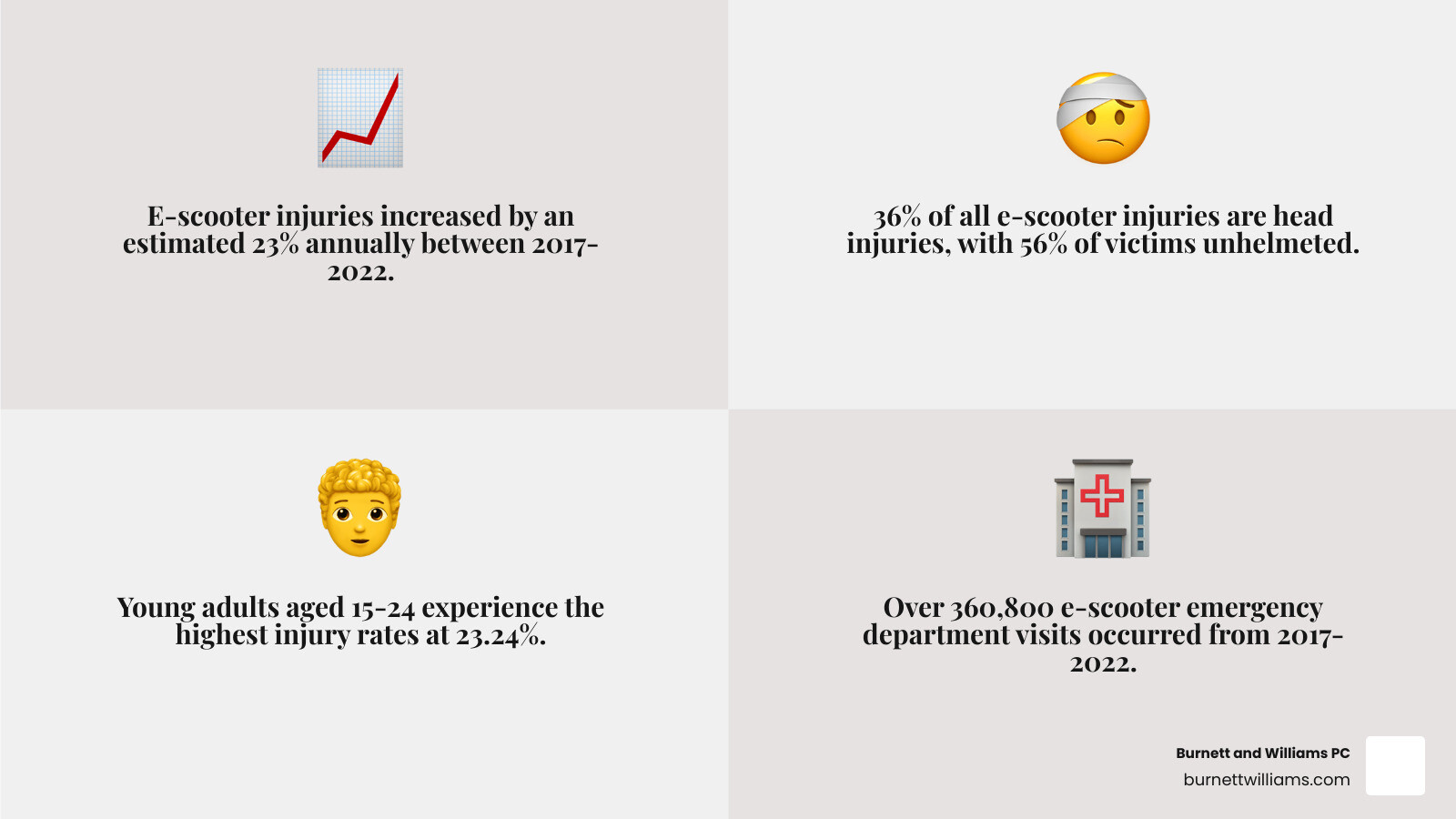
The Soaring Rate of E-Scooter Accidents: A Growing Concern in Virginia
The convenience of hopping on an e-scooter has come with a steep price. Since these devices rolled onto city streets, injuries have climbed at an alarming pace. For Virginia riders, these aren’t just statistics: they represent real people facing long recoveries.
The numbers paint a troubling picture. Emergency departments have treated a growing number of people for electric scooter accident injuries and other micromobility incidents in recent years.
Fractures top the list of common injuries, often affecting wrists, arms, and legs when riders instinctively try to break their fall. Contusions and abrasions follow closely behind. Severe road rash can require skin grafts and cause permanent scarring. The most serious concern is head trauma.
Head injuries are a major concern, accounting for a large portion of emergency visits. A significant number of these injuries involve the head, and many of those victims were not wearing helmets. These crashes can cause life-altering traumatic brain injuries (TBIs), affecting memory, personality, and daily life.
Certain groups face higher risks. Young adults tend to suffer the most e-scooter injuries. Despite age restrictions on most rental scooters, children remain disproportionately vulnerable, and males are also injured more frequently.
These trends are reflected in what Virginia hospitals are seeing. As e-scooters become fixtures on streets from Winchester’s Old Town to Richmond’s Canal Walk, emergency rooms are treating more fractures, head injuries, and severe road rash.
For Virginia riders, these risks are compounded by the state’s strict contributory negligence rule. This rule means even a minor rider mistake can prevent you from recovering compensation after a crash. Understanding these risks and Virginia’s laws is essential.
Top Causes of an Electric Scooter Accident and How to Avoid Them

Most electric scooter accidents are preventable, resulting from a mix of rider behavior, equipment issues, and road hazards. Rider inexperience, speeding, and distracted riding account for a huge portion of accidents. Collisions, poor road conditions, and scooter malfunctions contribute to serious injuries. Let’s review the most common causes and how to avoid them.
Rider Behavior: The Biggest Factor in an Electric Scooter Accident
Most e-scooter crashes trace back to rider decisions. Many people, especially younger riders, underestimate how fast these scooters can go. Some models accelerate quickly and reach speeds that turn a simple fall into a trip to the emergency room.
Helmet use is shockingly low. Studies show that a majority of victims with head injuries had no helmet protection. When you consider that a large percentage of e-scooter injuries involve head trauma, this becomes a critical oversight.
Alcohol and drug use are major culprits. Impaired riding significantly increases the risk of a crash and the likelihood of severe head trauma.
Virginia takes impaired riding seriously. Under Virginia law, you can be charged with a DUI for riding an e-scooter while intoxicated. The consequences are identical to a car DUI, including fines, license suspension, and even jail time. It’s not worth the risk.
Distracted riding is another common factor. Looking at your phone, carrying items, or simply not paying attention can compromise your balance and reaction time in a split second. Risky maneuvers like weaving through traffic, tandem riding (which most scooters prohibit), and ignoring traffic signals all increase your crash risk exponentially.
Nighttime riding is particularly dangerous. A majority of e-scooter accidents occur at night. Poor visibility works both ways: you can’t see hazards clearly, and drivers and pedestrians can’t see you. Always use lights, wear reflective clothing, and remember the golden rule: “see and be seen.” Better yet, assume no one sees you and ride defensively.
Following Virginia traffic laws isn’t optional. That means stopping at red lights, using designated bike lanes when available, and treating your scooter like the vehicle it legally is. In Virginia cities like Arlington and Alexandria, local ordinances prohibit sidewalk riding in many areas, requiring riders to stay in bike lanes or on streets. Know your local rules before you ride.
Environmental and Equipment Failures
Even the most careful rider can be caught off guard by hazards beyond their control. Virginia roads aren’t always scooter-friendly, and equipment failures happen more often than you’d think.
Poor road conditions are a frequent cause of crashes. Potholes, uneven pavement, cracks, and debris can send you flying before you have time to react. Whether you’re navigating the busy streets of Arlington or the quieter roads of Culpeper, these hazards are everywhere. Virginia municipalities have a responsibility to maintain safe roads, and when they fail to do so, they may be held liable for resulting accidents.
Lack of dedicated infrastructure forces e-scooter riders into dangerous situations. Without protected bike lanes separate from vehicle traffic, riders must share space with cars, trucks, and buses. This can lead to collisions with vehicles and conflicts with pedestrians, which account for a significant number of e-scooter injuries. These collisions often happen at intersections or when a rider suddenly enters traffic from a sidewalk.
Scooter malfunctions turn routine rides into emergency situations. Rental scooters, which get heavy use and inconsistent maintenance, are particularly prone to problems. Brake failure is a leading concern, with investigations often revealing problems with scooter maintenance. Worn tires, unexpected power loss, and other mechanical failures can all cause sudden crashes.
The difference between rental and privately owned scooters matters. Rental companies have a legal duty to maintain their fleets, and when they fail to do so, they can be held liable for injuries. If you own your scooter, regular maintenance checks become your responsibility. Either way, defective parts or poor maintenance can lead to serious accidents and potentially strong legal claims.
Navigating Virginia’s E-Scooter Laws and Liability Rules

Virginia lacks a single, statewide set of e-scooter rules. Unlike car traffic laws, regulations are decided by individual cities and counties. What’s perfectly legal in Leesburg might get you a ticket in Orange.
Most Virginia localities have banned riding on sidewalks, requiring you to stick to bike lanes or roadways instead. Speed limits vary by city. Richmond, for example, has its own specific regulations about where scooters can be ridden and parked. Arlington and Alexandria each have their own detailed rules covering everything from where you can ride to where you must park rental scooters.
Helmet laws also vary. While Virginia requires helmets for minors on bicycles, the rules for e-scooters for riders under 18 depend on local ordinances. Before you ride in any Virginia city, take a few minutes to check the local rules. What you don’t know really can hurt you, both physically and legally.
Who is Liable? Determining Fault in a Virginia Electric Scooter Accident
When an electric scooter accident happens, figuring out who’s responsible isn’t always straightforward. Virginia law recognizes that multiple parties might share blame, and identifying the at-fault party is crucial to any injury claim.
Negligent car drivers are often to blame. A driver who’s texting, speeding, or failing to check their blind spot before turning can easily cause a devastating crash with a scooter rider. “Dooring” accidents, where a driver or passenger opens a car door directly into a scooter rider’s path, are particularly common on busy streets in places like downtown Winchester or near Virginia Commonwealth University in Richmond.
Sometimes the scooter rider is at fault. Running red lights, weaving through traffic, riding under the influence, or performing risky maneuvers can make the rider responsible for any resulting injuries or property damage. Even jaywalking pedestrians can cause accidents if they step into traffic suddenly, giving a scooter rider no time to react.
Municipal liability for road defects is another possibility. If you crash because of a massive pothole on a Culpeper street or an unmarked hazard in Ashburn, the city or county might be legally responsible. Virginia localities have a duty to maintain their roads in reasonably safe condition. When they fail to do so, they can be held accountable.
Finally, scooter rental companies can be liable for negligence. If a shared scooter has defective brakes, worn tires, or a malfunctioning battery that causes your accident, the company that owns and maintains that fleet may be responsible. The same applies to defective parts from manufacturers. If a design flaw or manufacturing defect caused your crash, product liability laws may come into play.
The Harsh Reality of Contributory Negligence in Virginia
Virginia follows a legal rule called contributory negligence, and it is a particularly strict rule.
The rule is simple but brutal: if you’re found to be even 1% at fault for your own injuries, you cannot recover a single dollar from anyone else. Even if the other party was 99% at fault, your contribution to the accident bars you from compensation.
Let’s say you’re riding your e-scooter through a green light in Fairfax when a driver runs a red light and hits you. You suffer serious injuries and face thousands in medical bills. But if it turns out you were going a few miles over the speed limit, or you weren’t wearing a helmet as required by local ordinance, a jury might decide you were contributorily negligent.
This harsh rule makes seemingly minor mistakes catastrophic to your legal claim. Not wearing a helmet (where required), minor speeding, riding on a prohibited sidewalk, failing to signal, or riding at night without proper lights can all be used against you. Even something as small as glancing at your phone for a second could bar your entire claim.
That’s why proving you were entirely free of fault is absolutely critical in any Virginia electric scooter accident case. The defense will look for any tiny mistake you made, any rule you broke, any moment of inattention. If they can show you were 1% responsible, your case is over. This makes careful, law-abiding riding not just a safety issue, but a legal necessity in the Commonwealth of Virginia.
What to Do Immediately After an E-Scooter Crash in Virginia
The moments after an electric scooter accident can feel overwhelming. What you do right after a crash can make all the difference for your health and legal rights.
Your health comes first, always. Even if you feel okay or just a bit shaken up, seek immediate medical care. Some of the most serious injuries, like concussions or internal bleeding, don’t show symptoms right away. A medical professional can identify delayed-symptom injuries like TBIs. Keep all paperwork from your visit, as these records are crucial evidence for a claim.
Call the police and get an official report. Contact local law enforcement to file an accident report. Whether that’s the Virginia State Police, Leesburg Police Department, or Frederick County Sheriff’s Office, an official record creates a paper trail that insurance companies and courts take seriously. This report documents the scene, the parties involved, and the basic facts while they’re still fresh.
Document everything you can see. If you’re physically able, pull out your phone and start taking photos. Capture your injuries, the e-scooter (especially any damage or defects), any vehicles involved, road conditions like potholes or debris, traffic signs, and the surrounding area. Get wide shots and close-ups. These visual details can be invaluable evidence, especially in a state like Virginia where proving you weren’t at fault is critical.
Talk to witnesses and get their information. Eyewitness accounts can make or break a case in Virginia’s strict contributory negligence environment. If anyone saw what happened, politely ask for their names, phone numbers, and email addresses. A neutral third party who saw a car run a red light or a dangerous road hazard can be the difference between recovering compensation and walking away with nothing.
Don’t touch that scooter. If your e-scooter was damaged in the crash, resist the urge to fix it or throw it away. It may contain crucial evidence of a mechanical defect, faulty brakes, or worn tires. An attorney or expert might need to inspect it later, so preserve it exactly as it was after the accident.
Take mental notes about conditions. Jot down details about the weather, visibility, time of day, and any specific road hazards that might have contributed to the crash. Was it dark? Raining? Was there construction debris in the bike lane? These details fade from memory quickly, so capture them while they’re fresh.
Protecting Your Legal Rights: Deadlines and Notices
Virginia gives you a limited window to protect your legal rights after an electric scooter accident. The clock starts ticking the moment the crash happens, and missing these deadlines can cost you everything.
Virginia has a two-year statute of limitations for personal injury claims. That means you generally have two years from the date of your accident to file a lawsuit. Two years can pass quickly with ongoing medical treatments and insurance delays. Miss that deadline, and you lose your right to seek compensation.
You need time to investigate the accident, gather evidence, identify all potentially liable parties, and build a strong case that proves you were completely free of fault under Virginia’s harsh contributory negligence rule. Waiting to consult an attorney can mean missing these critical deadlines.
The bottom line? Don’t wait. If you’ve been hurt in an e-scooter crash anywhere in Virginia, from Petersburg to Culpeper to Arlington, talk to an attorney who understands Virginia personal injury law as soon as possible.
Frequently Asked Questions about E-Scooter Accidents in Virginia

After an electric scooter accident in Virginia, many people find themselves with urgent questions about their rights, responsibilities, and what comes next. We’ve compiled answers to some of the most common concerns we hear from riders and families across the Commonwealth.
Can I get a DUI for riding an e-scooter while intoxicated in Virginia?
Yes, and the consequences are just as serious as they would be in a car. Virginia law treats e-scooters as vehicles when it comes to driving under the influence. If you’re caught riding an e-scooter while impaired by alcohol or drugs, you can face the full weight of a DUI conviction: hefty fines, suspension of your driver’s license, and even jail time.
It’s a criminal charge with penalties similar to a car DUI. Given that alcohol is a common factor in e-scooter crashes, law enforcement takes these cases seriously. The message is simple: if you’ve been drinking, don’t ride. It’s not worth the risk.
Does my car insurance cover an e-scooter accident?
Unfortunately, probably not. Most standard auto insurance policies are designed specifically for motor vehicles, and e-scooters don’t fit that definition. While your policy might include medical payments coverage that could help with your own injuries regardless of fault, don’t expect your auto insurance to cover liability if you cause an accident on an e-scooter.
You might find some protection elsewhere, though. Homeowner’s or renter’s insurance sometimes includes personal liability coverage that could apply, but these policies often have exclusions for vehicle-related incidents, making coverage uncertain at best. Some credit cards offer secondary insurance for rental e-scooters if you used that card to pay for the rental, so it’s worth checking with your card issuer.
Insurance coverage for e-scooters is a gray area, often leaving riders unprotected. If you’re facing medical bills after an electric scooter accident, understanding what insurance might apply is a critical first step.
What if I was partially at fault for my e-scooter accident?
Under Virginia’s strict contributory negligence rule, being found even 1% at fault for an accident can completely bar you from recovering any compensation from another party.
This means if a driver hits you in Purcellville, but you were breaking a local rule (like not wearing a required helmet), a court could find you partially at fault. Under Virginia’s rule, this would prevent you from recovering damages for medical bills, lost wages, or pain and suffering.
This makes proving that the other party was solely at fault absolutely critical in any Virginia electric scooter accident claim. It’s why following every traffic law, wearing required safety gear, and documenting the scene thoroughly matters so much. Even small mistakes can have devastating legal consequences under Virginia’s unforgiving standard.
Given these complexities, especially Virginia’s contributory negligence rule, consulting with an experienced personal injury attorney who understands the nuances of e-scooter cases becomes essential if you’ve been injured through someone else’s negligence.
Conclusion
E-scooters offer convenience in Virginia’s cities, but that convenience comes with real risks. Electric scooter accident rates continue to climb across Richmond, Arlington, Alexandria, and beyond, leaving riders with serious injuries and complicated legal questions.
The causes are diverse, from rider behavior and environmental hazards to equipment failures. Virginia’s legal landscape is also challenging, with varying local ordinances and the unforgiving contributory negligence rule, where a minor mistake can eliminate your right to compensation.
That’s why understanding your rights matters so much. If you’ve been hurt in an e-scooter crash because of someone else’s negligence, whether it was a distracted driver, a city’s failure to fix dangerous potholes, or a rental company’s poor maintenance, you deserve to know your options. The legal aftermath can feel overwhelming while you recover from your injuries.
At Burnett & Williams PC, we’ve built our practice on responsive, caring client service. We believe in keeping you informed and involved in every decision that affects your case. We know Virginia’s personal injury laws inside and out, and we understand the unique challenges that electric scooter accident victims face under our state’s strict legal standards.