
Finding the Right Orange Traffic Accident Lawyer
An Orange traffic accident lawyer can help you understand your options after a crash, deal with insurance paperwork, and protect your claim while you focus on healing.
A sudden motor vehicle collision on busy thoroughfares like Route 15, Route 20, or around historic downtown Orange can upend your daily routine in an instant. Dealing with painful bodily injuries, unexpected medical bills, and vehicle repair expenses while trying to communicate with aggressive insurance adjusters creates immense pressure for accident victims and their families.
For a quick answer on how legal representation can assist you, look for a lawyer who can:
- Review the crash details, your injuries, and available insurance coverage options.
- Investigate fault thoroughly before crucial physical evidence and witness memories fade.
- Handle all insurer communications, official paperwork, and settlement negotiations on your behalf.
- Explain Virginia’s strict contributory negligence rule: if you are found even partly at fault for the crash, you may be completely unable to recover financial compensation.
- Track the standard two-year deadline for filing personal injury and wrongful death lawsuits in Virginia.
A collision on a road near Orange, whether it involves a passenger car, commercial truck, motorcycle, bicycle, or pedestrian, can leave you with growing bills and complicated questions. Taking the correct steps immediately following an accident can significantly influence the outcome of your recovery under Virginia’s fault-based legal system.
Immediate Steps to Take After a Crash in Orange, Virginia
When a sudden crash occurs on Route 15, Route 20, or a quiet rural road in Orange County, you may feel overwhelmed and unsure of what to do first. Taking quick, calm action protects your physical health and preserves crucial legal rights. For additional details on handling local collisions, explore our Orange Virginia Injury Guide.
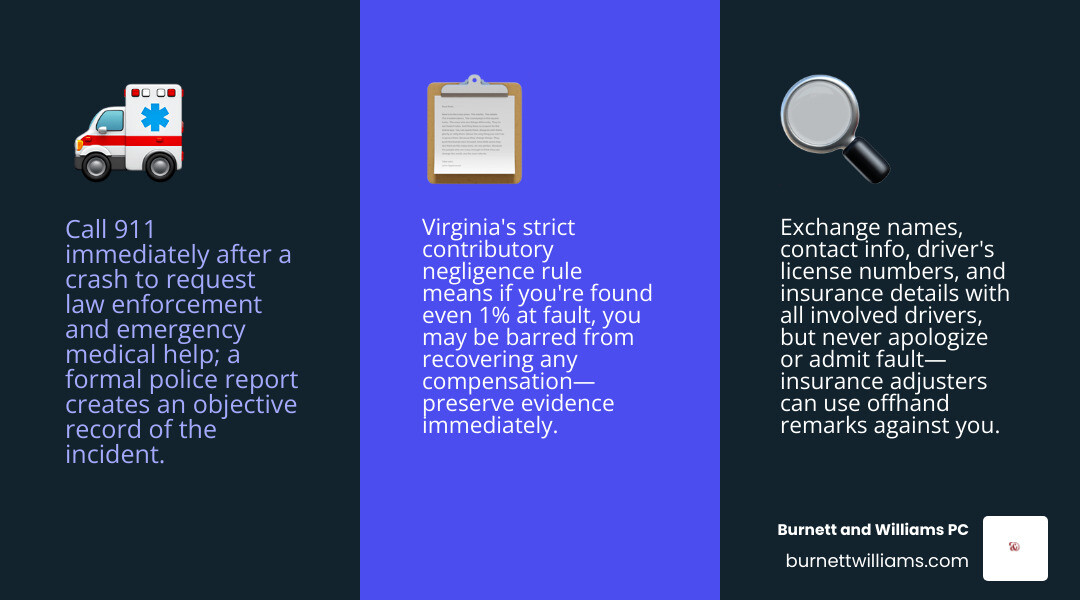
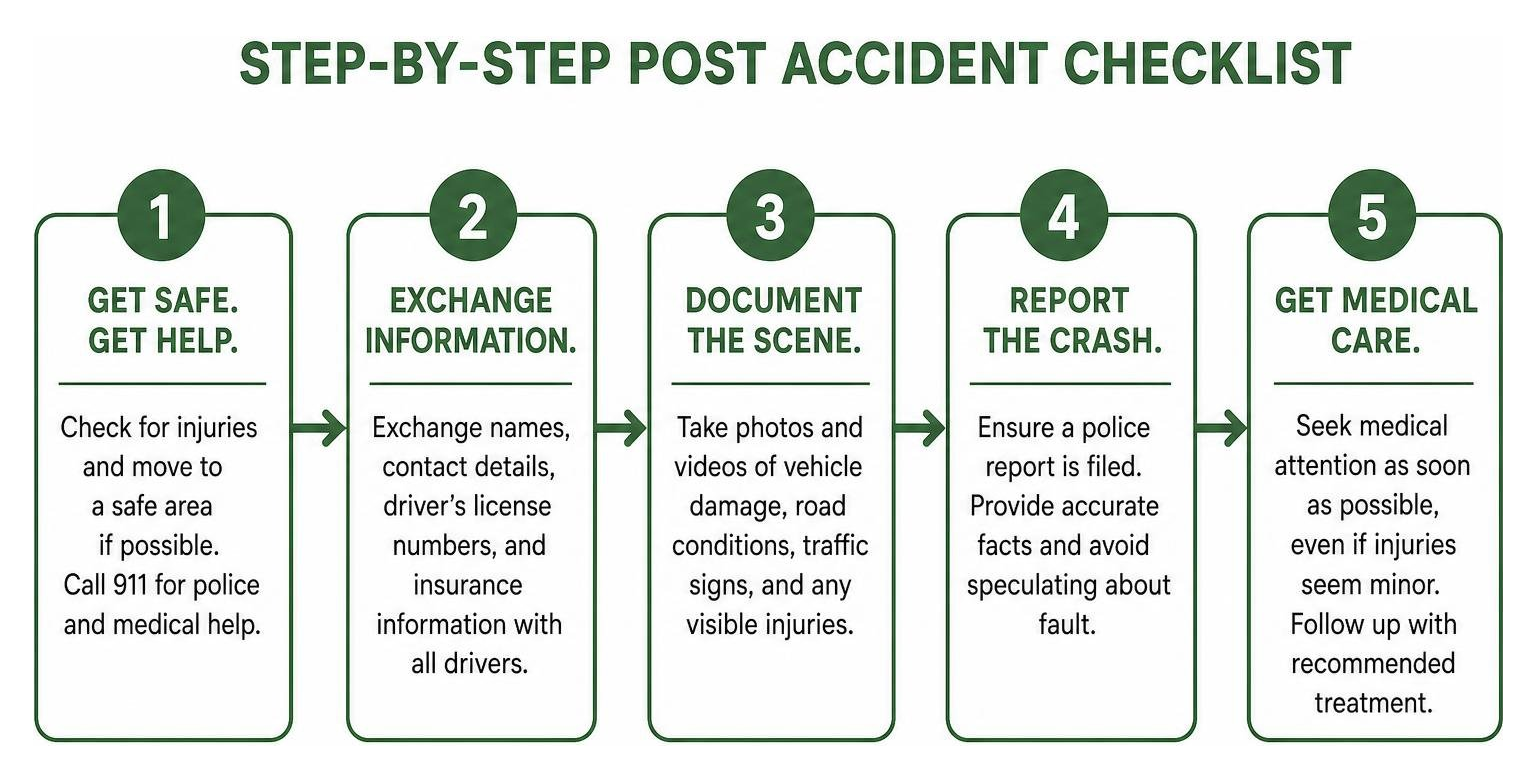
First, call 911 immediately to request law enforcement officers and emergency medical personnel. A formal police crash report provides an objective, official record of the incident, which can be invaluable when filing official reports with the Virginia Department of Motor Vehicles or establishing liability with insurance carriers. Exchange full names, contact information, driver’s license numbers, and insurance policy details with all involved drivers. Always maintain courtesy, but refrain from apologizing or making casual statements regarding fault, as insurance adjusters can later use offhand remarks to deny your financial recovery.
Documenting Evidence at the Scene
If you are physically able and it is completely safe to do so, document the collision scene thoroughly before vehicles are towed away:
- Take clear photographs and video footage of vehicle damage, tire skid marks, vehicle positioning, road hazards, traffic control signs, weather conditions, and visible bodily injuries.
- Gather full contact details from any eyewitnesses who stopped to assist, including nearby business owners, residents, or passing commuters.
- Note exact environmental and road details while your memory is fresh, such as the direction of travel, lane positions, visibility, and speed estimates.
Seeking Prompt Medical Care
Even if you believe you only suffered minor bumps or bruises, seek an immediate medical evaluation at an emergency room or urgent care facility. Traumatic brain injuries, internal organ damage, and soft tissue tears often present delayed symptoms hours or days after an impact. Obtaining prompt diagnostic records establishes a clear medical link between the collision and your injuries, preventing insurance carriers from arguing that your health conditions were pre-existing or caused by an unrelated event later on.
Why You Need an Orange Traffic Accident Lawyer After a Collision
Navigating an auto accident claim on your own can be daunting. Insurance adjusters are trained professionals whose primary responsibility is to minimize payouts and protect their company’s financial interests. When you work with an Orange traffic accident lawyer, we step directly between you and the insurance companies to handle all inquiries, establish full liability, and fight for maximum financial compensation. Learn more about local case management in our Orange Accident Lawyer Guide 2026.
How an Orange Traffic Accident Lawyer Navigates Contributory Negligence
Virginia operates under a strict contributory negligence standard. Unlike states that allow partially at-fault drivers to receive a reduced settlement based on percentage of fault, Virginia law dictates that if an injured person contributed even one percent to the cause of a collision, they are completely barred from recovering any financial compensation whatsoever.
Because of this rigid legal standard, insurance adjusters frequently look for any tiny detail or casual admission to shift a sliver of blame onto you. We work diligently to block unfair blame, gather undeniable proof of the other party’s full liability, and safeguard your rights under Virginia law.
Steps an Orange Traffic Accident Lawyer Takes to Build Your Case
To overcome contributory negligence defenses and establish maximum claim value, we take proactive steps early in the process:
- Conducting Independent Investigations: We inspect the crash site, examine police reports, analyze vehicle damage patterns, and secure local surveillance or dashcam footage.
- Consulting Accident Reconstruction Experts: In complex collisions involving multiple vehicles or commercial trucks, we collaborate with specialized engineering experts to reconstruct the exact sequence of events.
- Calculating Total Losses: We collect and review all medical bills, future medical care estimates, wage loss documentation, and expert opinion reports to establish an accurate and full valuation of your case.
- Negotiating Aggressively: We represent your best interests in settlement discussions, ensuring you are not pressured into accepting an unfair or inadequate settlement offer.
Key Legal Rules and Recoverable Compensation in Virginia Traffic Claims
Understanding how damages are evaluated helps you make informed decisions about your financial recovery following an auto collision in Orange County.
| Loss Category | Examples Included | Proof Required |
|---|---|---|
| Economic Damages | Emergency ER visits, surgery, ongoing physical therapy, prescription medication, lost wages, vehicle repair or replacement | Medical invoices, receipts, pay stubs, tax documents, property estimates |
| Non-Economic Damages | Physical pain, emotional distress, anxiety, loss of enjoyment of life, permanent scarring, physical impairment | Personal journals, family testimony, psychological assessments, physician reports |
Virginia Statute of Limitations for Personal Injury Claims
In Virginia, the statute of limitations for personal injury and wrongful death claims arising from a motor vehicle collision is generally two years from the date of the incident or death. Missing this strict legal deadline permanently bars you from seeking financial compensation through the court system.
If a fatal traffic accident occurs in a neighboring state involving an Orange County resident, our firm will associate with qualified local co-counsel in that legal jurisdiction to ensure all state-specific procedural rules and filing deadlines are satisfied.
Types of Compensation Available for Accident Victims
Victims of serious traffic crashes can seek compensation for both economic and non-economic losses. In cases involving catastrophic trauma, such as spinal cord injuries, complex fractures, or traumatic brain damage, claims must account for a lifetime of specialized medical care, adaptive home modifications, and diminished future earning capacity. To understand how complex catastrophic claims are handled, read our article on When Life Changes Finding a Catastrophic Injury Lawyer in Orange.
Frequently Asked Questions About Orange Traffic Accident Claims

What should I do immediately after a traffic accident in Orange?
Call 911 immediately to report the crash and request emergency medical assistance. Exchange contact and insurance information with all involved drivers, take detailed photos of the scene and vehicle damage, collect witness names, and seek a complete medical examination right away. Avoid making statements about fault or giving recorded statements to insurance adjusters until you consult a qualified legal professional who understands Virginia personal injury laws.
How long do I have to file a car accident claim in Virginia?
Under Virginia law, you typically have two years from the date of the accident to file a personal injury lawsuit, and two years from the date of death for a wrongful death claim. Because critical physical evidence like skid marks, road debris, and surveillance video footage can disappear quickly, starting the investigation as soon as possible after the crash is essential for protecting your legal rights.
How does Virginia’s contributory negligence rule affect my accident claim?
Virginia follows a strict contributory negligence rule. If the court or an insurance adjuster determines that you shared any fault, even as little as one percent, for causing the accident, you are legally barred from recovering any financial damages. An experienced legal team helps gather solid evidence to demonstrate that the driver at fault was entirely responsible for the collision, shielding you from unfair claims of partial liability.
Conclusion
Recovering from a serious car crash requires your full energy, time, and focus. Navigating complex legal frameworks, meeting strict filing deadlines, and countering aggressive insurance tactics should not add to your emotional and financial stress. By working with a dedicated legal team, you gain a compassionate ally who will stand by your side and advocate for fair compensation.
For more helpful details on navigating local injury cases and securing your financial recovery, consult our comprehensive Orange Personal Injury Complete Guide. When you are ready to discuss your situation, reach out to us at Burnett & Williams PC to schedule a free, personalized case evaluation.