
Why Understanding Richmond Brain Injury Resources Matters
For Richmond brain injury survivors and their families, finding reliable information is an immediate need. Recovering from a car crash, fall, or concussion can be overwhelming. This guide connects you with Richmond’s specialized rehabilitation services, support organizations, and legal resources.
Quick Overview: Richmond Brain Injury Support
- Medical Care: VCU Health System has one of only 16 federally designated Traumatic Brain Injury Model System of Care programs in the U.S.
- Rehabilitation: Sheltering Arms Institute offers intensive therapy for brain injury survivors.
- Community Support: Community Brain Injury Services (CBIS) provides case management in Central Virginia.
- Legal Protection: Virginia law has a two-year window to file a personal injury claim, and its contributory negligence rule makes experienced legal help vital.
- Caregiver Resources: The Brain Injury Association of Virginia (BIAV) offers education, support groups, and advocacy.
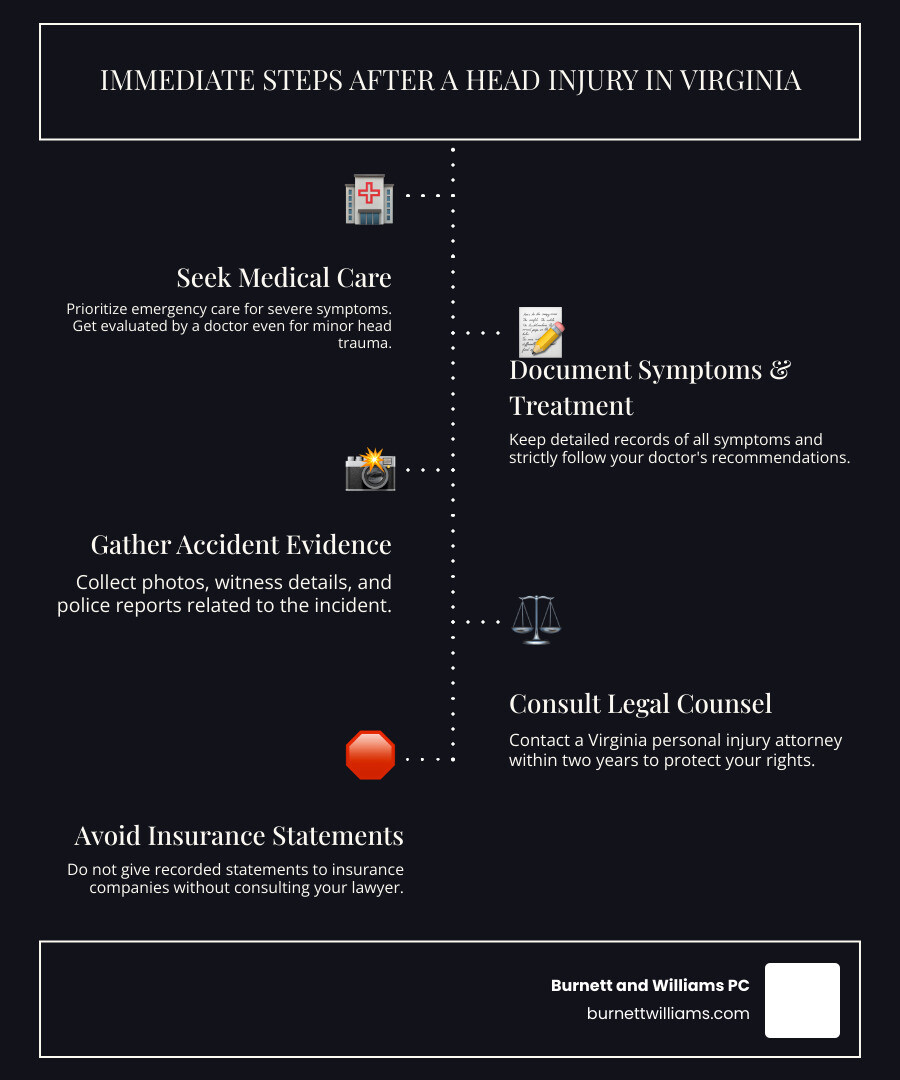
In Virginia, car accidents and falls are leading causes of traumatic brain injuries (TBIs). These injuries range from mild concussions to severe trauma requiring long-term care. Since symptoms like headaches or memory problems can appear days later, prompt medical evaluation is critical after any head injury.
Richmond has a robust network of specialized care providers. If someone else’s negligence caused your injury, Virginia law allows you to seek compensation for medical bills, lost wages, and pain and suffering.
Relevant articles related to Richmond brain injury:
Understanding Brain Injuries: Types, Symptoms, and Severity
When a Richmond brain injury occurs, it is important to understand the type of injury to make informed decisions. Traumatic Brain Injuries (TBIs) result from an external force, like a blow to the head in a car accident. A violent jolt, such as whiplash, can cause a TBI even without direct impact.
Common types of TBIs include:
- Concussions: Often called “mild” TBIs, concussions can have serious effects. Symptoms may not appear for hours or days.
- Contusions: These are bruises on the brain tissue that cause dangerous swelling and bleeding.
- Hematomas: These are pools of blood outside the blood vessels that create pressure on the brain and may require surgery.
- Diffuse Axonal Injury (DAI): One of the most severe TBIs, DAI involves torn nerve fibers from violent rotation, often leading to a coma and lasting disabilities.
Common causes of brain injuries in Richmond include falls, car accidents, sports injuries, bicycle accidents, and assaults.
The Spectrum of TBI Symptoms
TBI symptoms depend on the injury’s location and severity. They can be immediate or delayed, which is why they are sometimes called “invisible” injuries.
- Physical Symptoms: Headaches, nausea, dizziness, balance problems, and sensitivity to light.
- Cognitive Symptoms: Memory loss, confusion, difficulty concentrating, and sluggish thinking.
- Emotional and Behavioral Changes: Mood swings, irritability, anxiety, and depression.
Because symptoms can be delayed, a medical evaluation is crucial after any head trauma. Understanding the difference between a minor bump and actual brain damage is vital, as explored on our Head Injury vs. Brain Injury page.
Categorizing TBI Severity
Medical professionals classify TBIs as mild, moderate, or severe to guide treatment. The Glasgow Coma Scale (GCS) is a primary tool for this assessment.
- Mild TBI: Includes concussions. While often called “mild,” they can lead to persistent symptoms for months or years (Post-Concussion Syndrome).
- Moderate TBI: Involves loss of consciousness from 30 minutes to 24 hours and requires intensive rehabilitation.
- Severe TBI: Involves loss of consciousness for more than 24 hours. These are life-threatening injuries that often result in permanent disabilities.
A “normal” CT scan or MRI does not rule out a serious brain injury, as microscopic damage may not be visible. Evaluation by a TBI specialist is essential.
| TBI Severity | Loss of Consciousness | Amnesia Duration | Common Outcomes |
|---|---|---|---|
| Mild | Less than 30 minutes (or none) | Brief, usually hours | Full recovery is common, but Post-Concussion Syndrome is possible, with symptoms that may persist for months. |
| Moderate | 30 minutes to 24 hours | More than 24 hours, less than 7 days | Significant rehabilitation is needed. Cognitive and physical symptoms are common, and the recovery timeline varies. |
| Severe | More than 24 hours | More than 7 days | These injuries are life-threatening and often result in permanent disabilities. Long-term care is frequently required. |
The complexity of brain injuries and Virginia’s strict legal rules make specialized medical documentation essential for any personal injury claim.
The Landscape of a Richmond Brain Injury: Causes and Long-Term Effects

Accidents on Richmond’s busy roadways and construction sites are common causes of a Richmond brain injury. Leading causes of TBIs in the area include car and truck accidents, motorcycle collisions, and bicycle accidents. Other frequent causes are construction site accidents and slip and falls.
When someone’s negligence causes a brain injury, Virginia law provides a path to hold the responsible party accountable.
Lifelong Consequences of a TBI
The effects of a traumatic brain injury can last a lifetime. For more details, read our article: Long-Term Side Effects of Traumatic Brain Injury.
- Cognitive Deficits: Survivors may struggle with memory, focus, and problem-solving, which can prevent a return to work.
- Physical Disabilities: Chronic headaches, balance problems, and sensory issues can limit independence.
- Emotional and Behavioral Changes: Irritability, depression, and personality shifts can be difficult for survivors and their families.
- Financial Strain: The costs of medical care, rehabilitation, and lost income can be overwhelming.
How Brain Injuries Impact Children
When a child suffers a brain injury, it can disrupt their development, leading to long-term educational and behavioral challenges. The legal strategy for an injured child must plan for decades of future care. Learn more in our resource: Trauma and Brain Development.
Navigating Richmond’s Premier Support and Rehabilitation Network

Richmond offers a comprehensive network of specialized care for those who have suffered a Richmond brain injury.
VCU Health System is one of only 16 federally recognized Traumatic Brain Injury Model System of Care programs in the country. This designation means VCU Health provides care that meets the highest national standards, from the ER through long-term follow-up. Learn more about their program here: Traumatic Brain Injury Model System of Care.
Working with VCU Health, Sheltering Arms Institute provides intensive rehabilitation to help survivors rebuild their lives. Its specialized brain injury unit focuses on physical functioning, daily living activities, and cognitive skills.
After hospitalization, Community Brain Injury Services (CBIS) helps survivors navigate life after their injury. CBIS offers case management and clubhouse programs for skill-building and social reconnection.
Key Organizations and Resources for Virginians
Several Virginia organizations offer support to brain injury survivors and their families:
- The Brain Injury Association of Virginia (BIAV) is a central resource for advocacy, education, and support groups. Learn more about BIAV’s resources.
- The Virginia Department for Aging and Rehabilitative Services (DARS) manages key programs, including vocational rehabilitation and the Commonwealth Neurotrauma Initiative (CNI) Trust Fund.
- Caregiver support is available through organizations like BIAV, which offer programs for the unique challenges family members face.
Seeking Justice: Your Legal Rights After a Brain Injury in Virginia
If another’s negligence causes your Richmond brain injury, Virginia law allows you to seek compensation. A successful claim requires proving the other party acted without reasonable care, directly causing your injury. An experienced attorney can manage this complex process. To understand the process better, see our guide: What Does a Personal Injury Lawyer Do?.
Crucial Evidence for Your Claim
Because many TBI symptoms are “invisible,” a strong case requires comprehensive evidence. This includes medical records, diagnostic imaging, neuropsychological evaluations, witness statements, and expert testimony from specialists like neurologists and life care planners.
Navigating Virginia Law for a Richmond Brain Injury
Virginia has strict rules for personal injury claims that can impact your case.
First, Virginia has a two-year statute of limitations to file a lawsuit from the date of injury. If you miss this deadline, you lose your right to seek compensation. Contact an attorney promptly to protect your rights.
Second, Virginia follows the harsh rule of contributory negligence. If you are found even 1% at fault for the accident, you are barred from recovering any damages. This makes skilled legal representation essential.
If your claim is successful, you may recover compensation for medical expenses, lost wages, and pain and suffering. Learn more on our page: Types of Damage Claims in a Virginia Personal Injury Lawsuit. The compensation you may receive depends on the specific facts of your case.
Common Questions About Richmond Brain Injury Claims
After a Richmond brain injury, you will likely have questions about your legal options. Here are answers to some common concerns.
How much is a TBI case worth in Virginia?
There is no single answer, as the value of a brain injury claim is unique to each case. The final amount depends on the severity of the injury, total financial losses, future care needs, and the impact on your quality of life and earning potential.
We can only provide an honest assessment after a thorough review of your case. For more insight, listen to our Podcast: What is My Case Worth? Breaking Down the Value of a Personal Injury Claim.
What if the insurance company says my concussion isn’t serious?
Insurance adjusters often try to minimize concussions, but they are real brain injuries with potentially serious, long-term effects. An insurer might point to a normal CT scan or claim your symptoms are exaggerated.
We counter these tactics with solid evidence, including detailed symptom journals and testimony from medical experts like neurologists. If a concussion has altered your life, you may have a valid claim. Do not let an insurance adjuster dismiss your injury.
Can I recover damages if I was partially at fault in Virginia?
This is a critical question because Virginia follows a strict contributory negligence rule. Under this rule, if you are found to be even 1% at fault for the accident, you are barred from recovering any compensation. It is an all-or-nothing system.
For example, an insurer could argue you contributed to a crash and deny your claim if you were going slightly over the speed limit when another driver ran a red light. This is why you should never give a recorded statement to the other party’s insurer without consulting an attorney. Skilled legal advocacy is essential to defend you against any claims of shared blame.
Conclusion: Taking the Next Step on Your Recovery Journey
A Richmond brain injury is a life-altering event, but you do not have to face it alone. Our community offers a strong support system, from the expert medical care at VCU Health and Sheltering Arms to the community resources provided by CBIS and BIAV.
If someone else’s negligence caused your injury, Virginia law gives you the right to seek the financial resources needed for your recovery. At Burnett & Williams PC, we are committed to protecting your rights while you focus on healing.
Virginia’s strict laws, including the two-year statute of limitations and contributory negligence rule, make it vital to act promptly. The compensation you may be entitled to can cover medical bills, lost wages, and pain and suffering, providing crucial support for you and your family.
Whether you need help connecting with resources or exploring your legal options, we are here to help. Find help from a Virginia Personal Injury Attorney who will stand with you and fight for the support you need to rebuild your life.