
Why Northern Virginia Brain Injury Support Matters Right Now
Northern Virginia brain injury survivors face significant challenges in finding the care and resources they need. With over 400,000 survivors in the region, navigating medical appointments, insurance, and recovery can be overwhelming.
Fortunately, Northern Virginia has a strong support network. Key resources include:
- Medical Care: Inova Health System provides specialized concussion clinics and neuro-critical care.
- Free Support: Brain Injury Services (BIS) offers no-cost case management and peer support.
- State Programs: The Virginia DARS Brain Injury Services Coordination Unit connects survivors to statewide aid.
- Legal Rights: Virginia law allows two years from the injury date to file a personal injury claim.
- Advocacy: The Brain Injury Association of Virginia (BIAV) provides education and caregiver forums.
Brain injuries are often “invisible,” with symptoms like memory loss, emotional changes, and coordination issues that may not appear immediately. A concussion that seems minor can have lasting effects.
Whether your injury was from a car crash on I-66, a workplace fall, or a sports concussion, knowing your options is crucial for your recovery and financial stability. This guide covers the medical, community, and legal support available to brain injury survivors in Fairfax County, Loudoun County, and the surrounding Northern Virginia area.
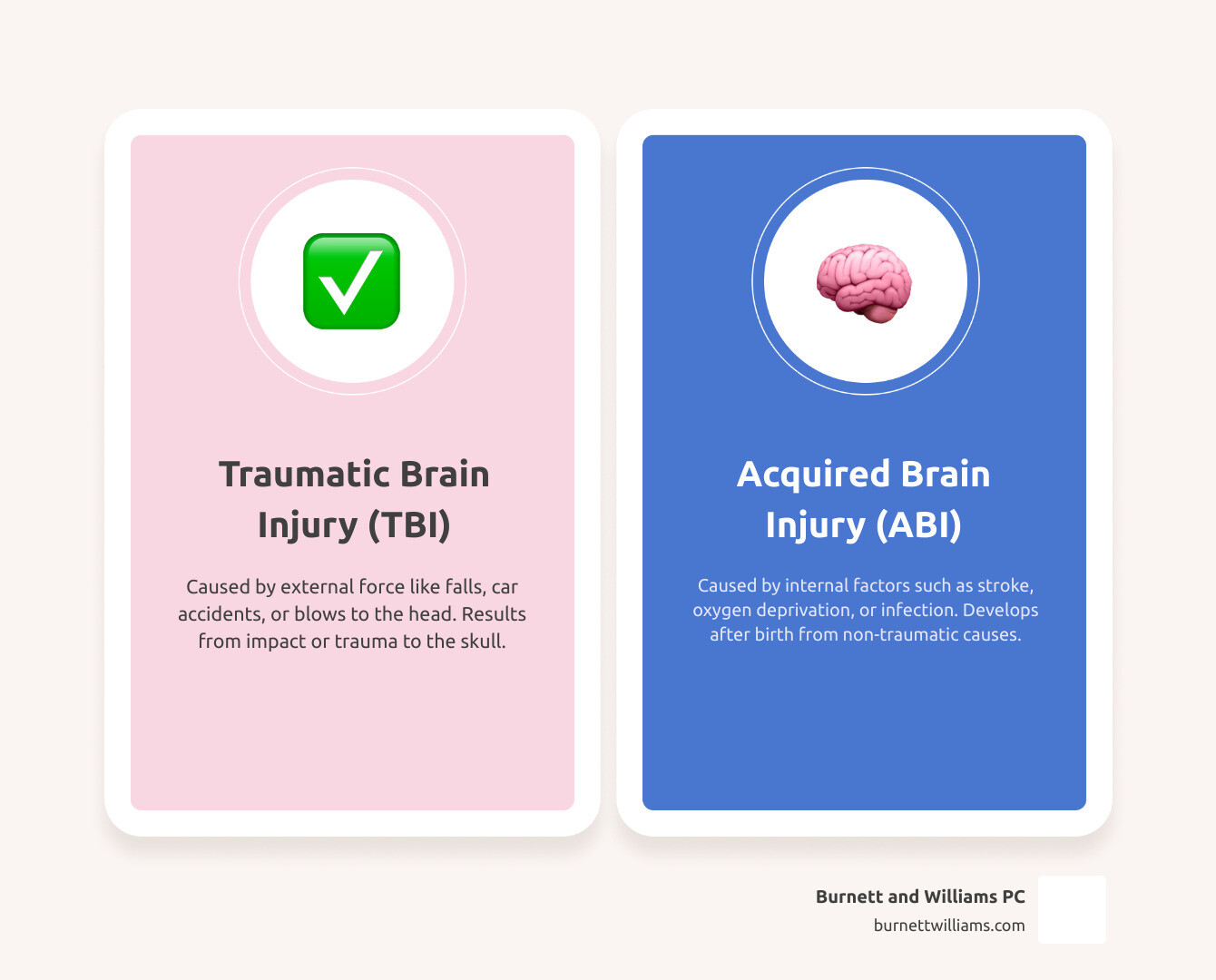
Terms related to Northern Virginia brain injury:
Understanding Traumatic Brain Injury (TBI) in Virginia
A Northern Virginia brain injury often begins with a single event, like a car crash on I-95 or a fall. Understanding the injury is the first step toward recovery.
A traumatic brain injury (TBI) occurs when an external force damages the brain. This is distinct from an acquired brain injury (ABI), which includes non-traumatic causes like strokes or infections. Even a “mild” TBI, or concussion, is a serious injury requiring medical attention. A TBI can happen without loss of consciousness, especially in car accidents where the brain strikes the skull due to rapid deceleration.
Many TBIs are not immediately reported, but it’s crucial to see a doctor after any head impact, even if you feel fine. Proper diagnosis is key for your health and any future legal action. For more details on head trauma, you can find more info about head vs. brain injuries.
Immediate and Long-Term Symptoms
Brain injury symptoms can appear immediately or develop over days or weeks.
Mild TBI (concussion) symptoms include headaches, dizziness, confusion, memory problems, and sensitivity to light or noise. You might also experience blurred vision, fatigue, or irritability.
Moderate to severe TBI symptoms are more alarming: a persistent severe headache, repeated vomiting, slurred speech, weakness on one side of the body, or seizures. Loss of consciousness, or clear fluid draining from the nose or ears, requires immediate emergency care. Severe injuries can lead to coma or other long-term states of impaired consciousness.
Long-term effects can be life-altering. Cognitive challenges like memory loss and difficulty concentrating can prevent a return to work or school. Motor skill impairments may affect balance and coordination.
Survivors often face persistent behavioral and psychological changes, such as anxiety, depression, and personality shifts, which can strain relationships. These “invisible” symptoms make recovery difficult, as others may not understand the survivor’s struggles. This is why comprehensive medical, rehabilitation, and legal support is so important for those with a brain injury in Fairfax, Loudoun, or Prince William counties.
For the latest research and guidance on traumatic brain injury, the CDC’s Traumatic Brain Injury page offers valuable information for survivors and families navigating recovery.
Common Causes of Brain Injuries in Northern Virginia
The leading causes of traumatic brain injury nationwide, according to the CDC, are falls, vehicle accidents, being struck by objects, and assaults. These same patterns are prevalent across Fairfax County, Loudoun County, and the surrounding areas.
Vehicle accidents are a primary source of Northern Virginia brain injury cases. The region’s busy highways, including I-95, I-66, and the Capital Beltway, see frequent collisions. The force from a crash, even without a direct head impact, can cause the brain to strike the skull, leading to severe injury.
Falls are another major cause, affecting all ages. Children may fall at playgrounds, adults can slip in public spaces, and older adults are particularly vulnerable.
Other common causes include struck-by-object incidents on construction sites or in stores, physical assaults, and sports-related injuries. Youth sports like football and soccer are popular in Northern Virginia but carry a real risk of concussions. For more on this topic, you can explore more info on football concussions.
Each year, millions of Americans sustain a TBI. Understanding these causes is key to prevention and helps ensure that those affected by a Northern Virginia brain injury know that support is available.
Navigating Medical and Rehabilitation Services in Northern Virginia
After a Northern Virginia brain injury, prompt medical care is critical. Our region offers excellent hospitals, clinics, and rehabilitation programs for survivors.
Immediate medical help is the first priority. Go to the nearest emergency room after any head impact or if you show signs of confusion. Hospitals throughout Northern Virginia, including the Inova Health System, have staff trained in neuro-critical care. For milder TBIs, Inova’s specialized concussion clinics provide focused assessment and recovery guidance.

The rehabilitation journey often involves a team of specialists.
- Physical therapy rebuilds strength, balance, and coordination.
- Occupational therapy helps with daily living tasks like dressing, cooking, or work-related activities.
- Speech-language pathology addresses communication or swallowing issues.
- Cognitive rehabilitation targets memory, attention, and problem-solving skills.
A coordinated approach combining these therapies offers the best chance for a full recovery.
Specialized State and Community Programs
Virginia provides specialized programs to help survivors rebuild their lives. The Inova Concussion Clinic in Leesburg provides comprehensive, multidisciplinary care for concussions that occurred four months ago or less. The team includes brain injury specialists and rehabilitation therapists. Also, the Brain Treatment Center in Ashburn specializes in Magnetic e-Resonance Therapy (MeRT), a non-invasive treatment that uses sophisticated diagnostics to optimize brain function. They treat a range of neurological conditions, including TBI.
Community Support Services (CSS) also teach coping strategies and workarounds for managing daily responsibilities. You can learn more about WWRC’s programs online, which many find essential for overcoming brain injury. This combination of medical, therapeutic, and community support is vital after a Northern Virginia brain injury.
Key Support Systems for the Northern Virginia Brain Injury Community
Recovering from a brain injury can feel isolating, but you are not alone. Northern Virginia has a strong network of organizations dedicated to helping survivors and their families.

The Brain Injury Association of Virginia (BIAV) is a central hub for resources. Its free Information & Referral program connects families with help for public benefits, housing, and medical equipment. BIAV also runs support groups and maintains a community directory to ensure everyone affected by a Northern Virginia brain injury finds help. Visit the Brain Injury Association of Virginia to learn more.
Brain Injury Services (BIS) offers free, hands-on services for adults and children in Northern Virginia. Their case management program provides personalized support for navigating the medical system and insurance. BIS also offers vocational programs, assistive technology, and innovative therapies like equine therapy to help survivors find their “new normal.” Explore Brain Injury Services in VA to see how they can help.
State-Level Coordination and Awareness
The Virginia Department for Aging and Rehabilitative Services (DARS) oversees the Brain Injury Services Coordination (BISC) Unit, a gateway to state-funded support. This unit manages millions in grants that fund essential services.
DARS also leads awareness efforts, such as Brain Injury Awareness Month each March, and hosts caregiver forums. By gathering input from survivors and families, the state works to ensure no one falls through the cracks. For more details, you can read more info on Brain Injury Awareness Month in Virginia.
Legal Rights and Recourse After a Brain Injury in Virginia
When another’s negligence causes a Northern Virginia brain injury, the impact is devastating. Medical bills mount, work becomes impossible, and families face new caregiving burdens. Virginia law provides the right to seek compensation in these situations.
Brain injuries often result from preventable accidents, such as a distracted driver on Route 7 or a fall on an unsafe property. If negligence caused your injury, you may have a personal injury claim. Compensation can cover medical expenses (current and future), lost wages, diminished earning capacity, and pain and suffering.
Pursuing a claim provides the financial stability needed for recovery. The lifetime costs of a brain injury can be millions, so fair compensation is crucial. It also holds negligent parties accountable, promoting safer community standards.
Understanding Your Legal Options in Virginia
Virginia’s laws have unique features that make experienced legal guidance essential for brain injury cases.
The two-year deadline is firm. In Virginia, you typically have two years from the injury date to file a personal injury lawsuit. This statute of limitations has very few exceptions. Building a strong case takes time, so it is critical to consult an attorney early. Once the deadline passes, you lose your right to seek compensation.
Virginia’s contributory negligence rule is harsh. This rule bars you from recovering any compensation if you are found even 1% at fault for the accident. Insurance companies will use this rule to try to shift blame and deny your claim.
An experienced attorney who understands Virginia’s laws is vital. They can build a case that anticipates contributory negligence defenses and counters insurance company tactics. After a Northern Virginia brain injury, you shouldn’t have to steer these complex legal standards alone. For more information, visit our pages on Virginia TBI lawyers or find a brain injury attorney.
Frequently Asked Questions about Brain Injury Support
Families dealing with a Northern Virginia brain injury often have urgent questions. Here are answers to some common concerns.
What is the first step I should take if I suspect a brain injury?
Seek immediate medical attention. Do not wait to see if symptoms improve. A healthcare professional must evaluate you, even if the injury seems minor. Describe every symptom to your doctor, as some can worsen over time. Proper medical documentation is vital for your health and any potential legal claim.
Are there free support services for brain injury survivors in Northern Virginia?
Yes. Brain Injury Services (BIS) provides free case management, peer support groups, and vocational assistance to survivors of all ages in Northern Virginia. The Brain Injury Association of Virginia (BIAV) also offers a free Information & Referral program to connect you with resources for public benefits, housing, and more. Both organizations provide these essential services at no cost.
How long do I have to file a legal claim for a brain injury in Virginia?
In Virginia, you generally have two years from the date of the injury to file a personal injury lawsuit. This statute of limitations is a strict deadline. The clock starts on the day of the incident, not when you find the full extent of your injuries.
Because of this deadline and Virginia’s harsh contributory negligence rule, it is crucial to consult an attorney as soon as possible. If your Northern Virginia brain injury was caused by someone else’s negligence, do not wait to explore your legal options. Acting quickly protects your right to seek the compensation you deserve.
Conclusion
Recovering from a Northern Virginia brain injury is a challenging journey, but you do not have to face it alone. Our region offers a strong network of support, from medical care at Inova Health System to free community programs through BIAV and BIS.
Understanding your legal rights is equally important. If negligence caused your injury, Virginia law allows you to seek compensation for medical bills, lost wages, and pain and suffering. However, you must act within the state’s strict two-year statute of limitations and steer its unforgiving contributory negligence rule.
At Burnett & Williams PC, we understand the profound impact a brain injury has on a family. We provide caring, responsive service and strive to secure the compensation you need for your recovery.
If another’s negligence caused your Northern Virginia brain injury, we are here to help. Contact our Culpeper office for a free consultation to discuss your path forward.