
What to Do After a Delivery Truck Accident in Culpeper
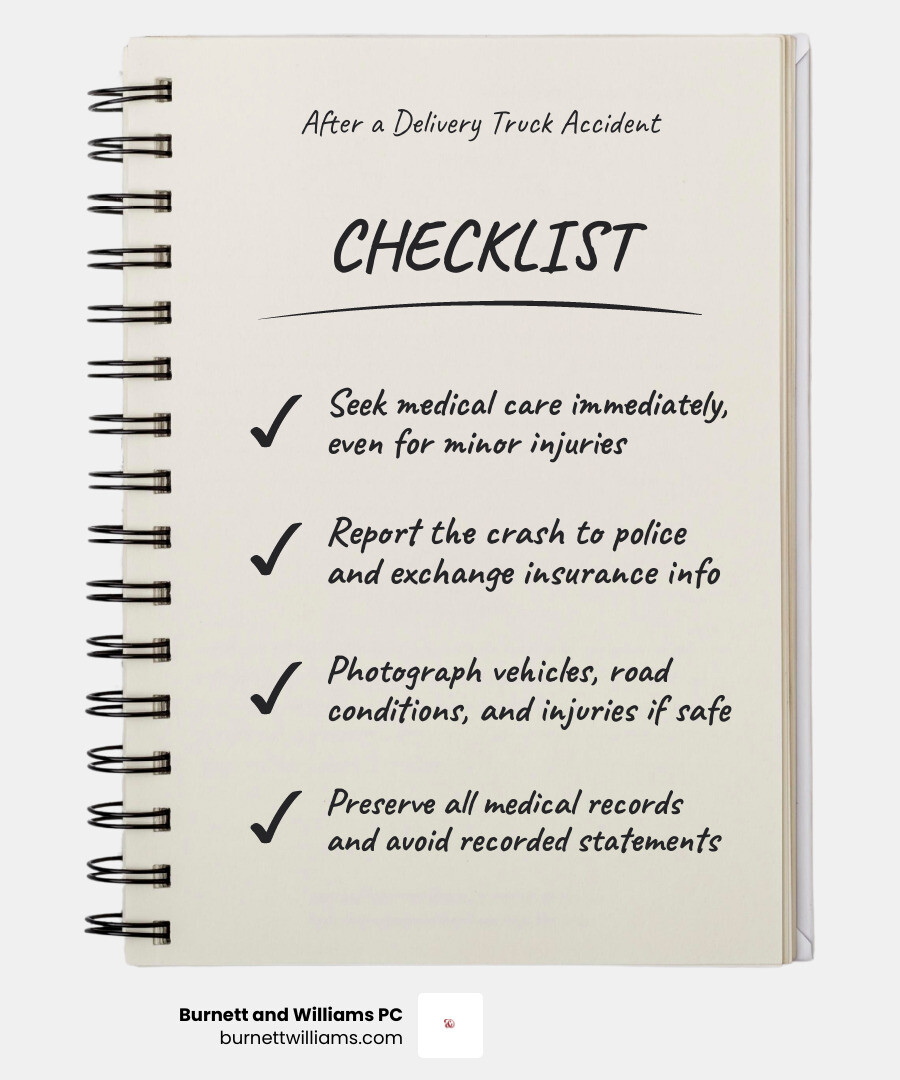
If you were hurt in a delivery truck accident in Culpeper, get medical care first. Even if you believe your injuries are relatively minor, symptoms of serious trauma such as concussions, internal bleeding, and soft tissue damage often take hours or days to fully appear. Once you have secured emergency medical treatment, report the crash immediately to law enforcement, photograph the vehicles and surrounding road conditions if it is safe to do so, and save witness contact details alongside the driver’s commercial insurance information. Keep every medical record, diagnostic bill, and discharge summary in a dedicated file, and avoid giving the delivery company’s insurer a recorded statement before you fully understand your legal rights.
Virginia enforces a strict contributory negligence rule that can completely bar your financial recovery if you are found even one percent at fault for the crash. Furthermore, the legal deadline to file most personal injury or wrongful death lawsuits in Virginia is two years, which means that gathering and preserving critical evidence early is vital for protecting your claim.
Key delivery truck accident in Culpeper vocabulary:
Understanding What Causes Delivery Truck Collisions Across Culpeper County
Culpeper County has grown significantly as a vital logistical link between Central Virginia and Northern Virginia. Major transportation corridors like Route 29 and Route 15, and regional bypass connectors near Interstate 66 experience an ongoing flow of heavy freight and local parcel distribution vehicles. When regional distribution centers and e-commerce fulfillment hubs enforce unrealistic delivery quotas and tight delivery windows, drivers face intense operational pressure to rush between rural residential stops and congested town centers.
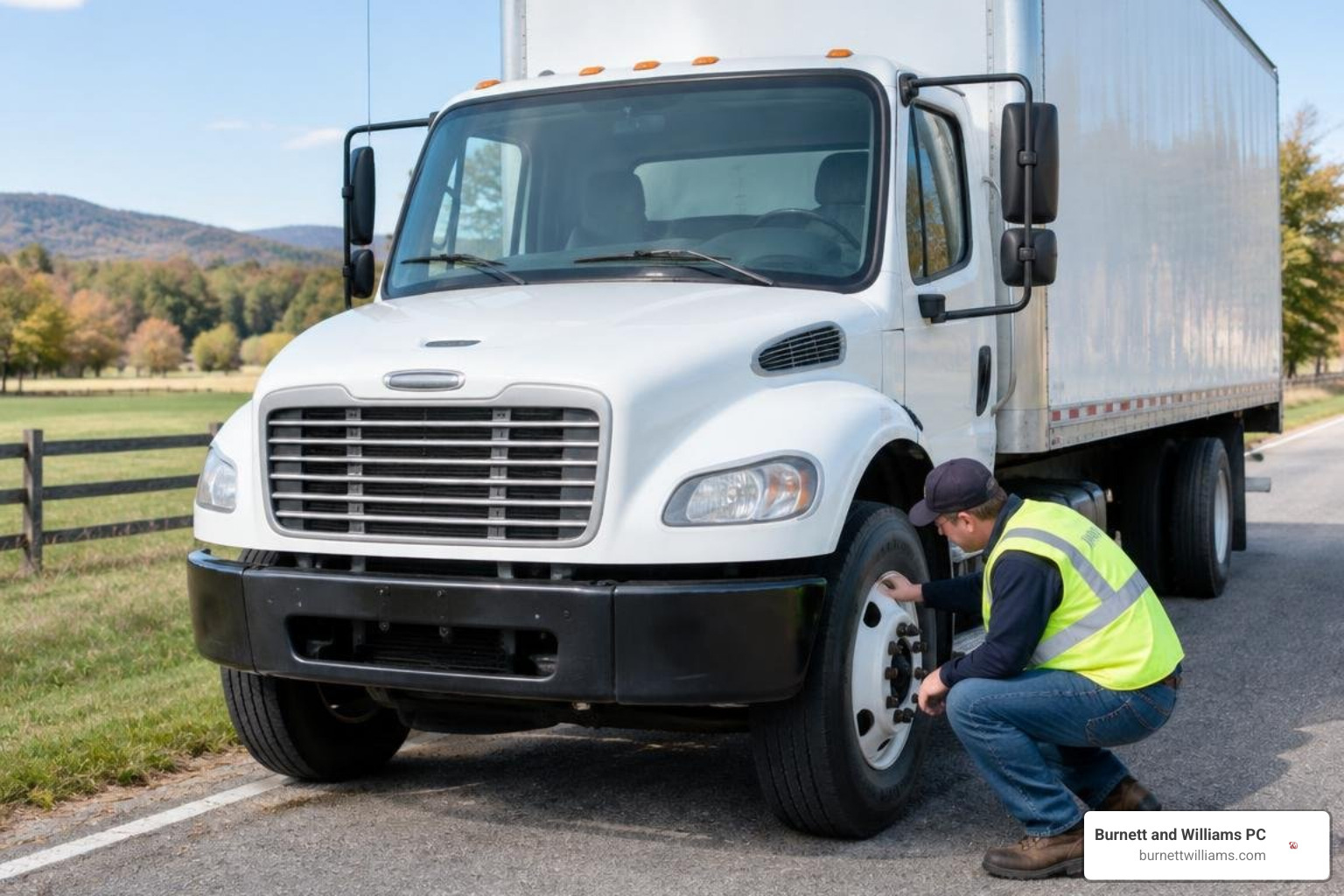
This continuous workplace pressure often leads directly to preventable driver errors, including sudden lane changes without signaling, excessive speeding through uncontrolled rural intersections, distracted driving caused by handheld navigation devices, and driver fatigue from prolonged shifts behind the wheel. In addition to driver conduct, commercial motor carriers must strictly adhere to mandated vehicle inspection schedules, regular brake maintenance, and proper cargo securement protocols. According to federal commercial crash report data, heavy commercial vehicles operating throughout Culpeper can experience sudden mechanical breakdowns, catastrophic tire blowouts, or severe cargo shifts that create life-threatening road hazards even on clear, dry days.
Unique Challenges Posed by Commercial Box Trucks and Vans
Commercial delivery fleets encompass a wide variety of vehicle types, ranging from standard high-roof cargo vans to medium-duty box trucks weighing up to 26,000 pounds gross vehicle weight. These substantial commercial vehicles require significantly longer stopping distances than standard passenger cars, particularly when traveling downhill or on wet rural asphalt, and they feature massive blind spots along their passenger sides and directly behind their rear cargo doors.
When commercial couriers stop abruptly in active travel lanes to make residential deliveries, double-park on narrow streets, or pull out of blind country driveways without adequate roadway clearance, catastrophic collisions are often the direct result. The violent physical forces generated in these crashes frequently cause catastrophic injuries, such as traumatic brain injury (TBI), severe neck fractures, and permanent spinal trauma. Seeking specialized truck accident legal guidance ensures that injured motorists have the experienced representation needed to hold freight carriers, logistics contractors, and commercial fleet operators accountable for these complex vehicle dynamics.
Key Steps to Take After a Delivery Truck Accident in Culpeper
Your physical health and personal safety must always remain your highest priority following any commercial motor vehicle crash. Call 911 immediately so local emergency medical technicians and Culpeper law enforcement officers can secure the roadway, administer emergency care, evaluate all vehicle occupants for hidden trauma, and compile an official police collision report that documents the scene.
If you are physically able and can do so without placing yourself in danger from oncoming traffic, capture thorough photographic and video evidence of all vehicle damage, skid marks, fluid spills, deployed airbags, street signage, and prevailing weather conditions. Heavy truck wrecks frequently block narrow rural arteries and demand coordinated VDOT incident and detour management, which means that road clearing crews, tow operators, and emergency responders can quickly alter or remove vital physical evidence from the pavement.
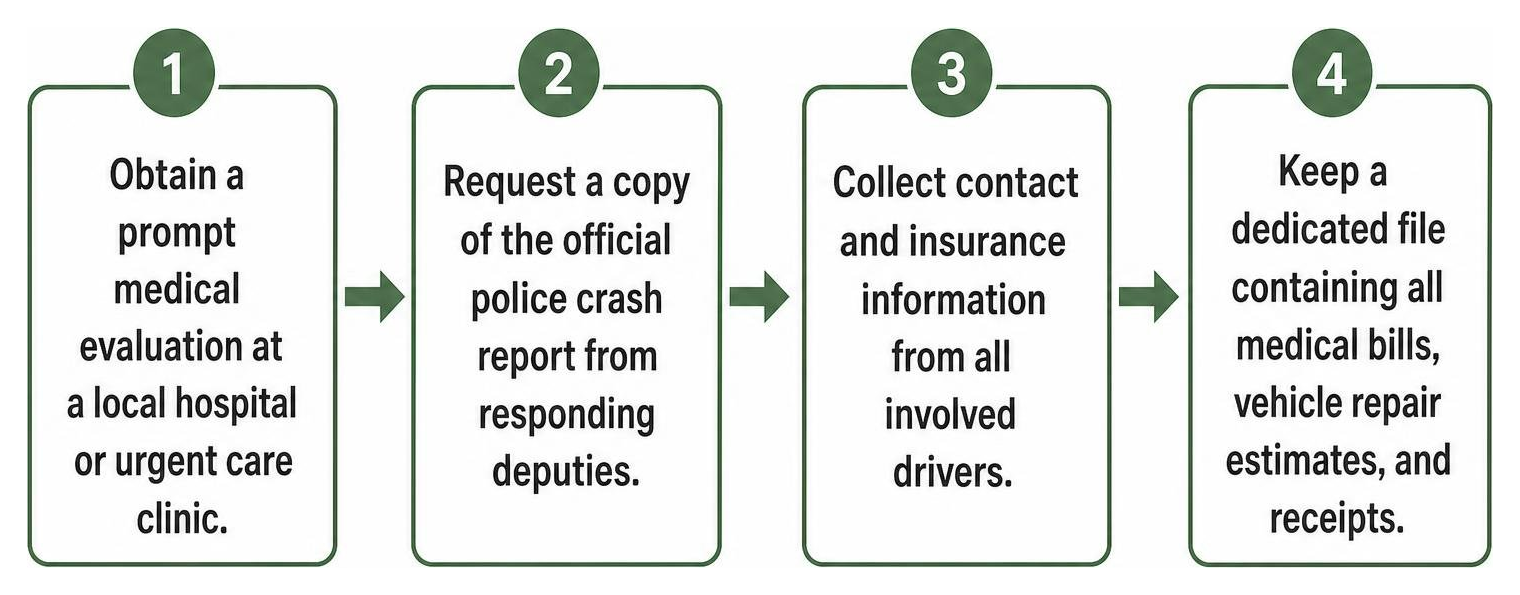
- Obtain an immediate, comprehensive medical evaluation at a local emergency room, trauma center, or urgent care facility to diagnose both visible and internal trauma.
- Request a complete copy of the official police crash report from responding deputies or state troopers as soon as it becomes available.
- Collect full contact information, driver identification, corporate employer names, and commercial insurance policy numbers from every driver involved.
- Maintain a well-organized file containing every medical bill, diagnostic imaging report, prescription receipt, vehicle repair estimate, and written record of missed work hours.
Understanding Liability in a Delivery Truck Accident in Culpeper
Determining legal fault in a commercial delivery collision is rarely as straightforward as identifying which individual driver made a driving mistake. Modern parcel delivery drivers operate under diverse, layered employment structures, including direct corporate employment, independent contractor arrangements, temporary staffing placements, or third-party logistics leasing agreements.
Under Virginia law, an employer is generally held vicariously liable for the negligent actions and driving errors of its employees when those acts occur within the legitimate scope of their employment duties. Depending on the circumstances of the wreck, other legally responsible parties may include third-party fleet maintenance contractors who failed to repair critical brake systems, warehouse loading crews who improperly balanced cargo freight, or vehicle component manufacturers. Successfully navigating injury claims in Culpeper requires an immediate, detailed investigation into driver qualification files, electronic logging devices, telematics data, and corporate safety records.
Navigating Virginia Injury Laws for Commercial Vehicle Claims
Commercial delivery truck claims involve substantial corporate insurance policies, high financial stakes, and experienced defense teams whose primary objective is to minimize or completely deny financial payouts to injured motorists. Individuals recovering from a severe collision must understand how Virginia’s procedural rules and legal standards govern their personal injury case.
| Claim Factor | Standard Passenger Vehicle Claim | Commercial Delivery Truck Claim |
|---|---|---|
| Insurance Policy Limits | Typically standard personal auto limits | Substantial commercial liability policies |
| Number of Liable Parties | Usually limited to the individual driver | Driver, carrier, contractor, and cargo loaders |
| Evidence Required | Basic police report and repair estimates | Telematics data, driver logs, maintenance records |
| Filing Deadline | Two years from the collision date | Two years from the collision date |
In Virginia, you generally have a two-year statutory window from the date of the collision to file a formal personal injury or wrongful death lawsuit. If a fatal crash occurs in a neighboring state, our firm will find co-counsel in that jurisdiction to assist with state-specific legal requirements. Taking decisive legal action immediately after a crash enables your legal team to issue formal spoliation letters that legally prohibit the delivery company from erasing internal electronic data, deleting dashcam footage, or repairing and altering damaged vehicle components.
How Virginia Contributory Negligence Impacts a Delivery Truck Accident Culpeper Case
Virginia remains one of only a few jurisdictions nationwide that still enforces a strict contributory negligence rule. Under this uncompromising legal standard, if the commercial insurance carrier proves that your own driving behavior or negligence contributed even one percent to the cause of the collision, you can be completely barred from recovering any financial compensation whatsoever.
Corporate insurance adjusters and defense attorneys routinely exploit this rule by alleging that an injured motorist was traveling slightly over the speed limit, following too closely, or failing to maintain a proper lookout before the crash occurred. Defeating these aggressive defenses requires meticulous evidence gathering, detailed accident reconstruction analysis, witness interviews, and skilled advocacy from an experienced truck accident attorney in Virginia who understands how to protect clients from unjust allegations of fault.
Frequently Asked Questions About Culpeper Truck Collisions
How long do I have to file a delivery truck accident claim in Virginia?
In Virginia, the statute of limitations for filing a personal injury or wrongful death lawsuit is two years from the exact date of the collision. If you fail to file your lawsuit in a court of proper jurisdiction before this two-year deadline expires, you will permanently lose your legal right to pursue financial compensation for your medical expenses, lost wages, and pain and suffering.
Who can be held responsible for a commercial delivery crash?
Legal liability in a delivery truck collision often extends well beyond the individual driver behind the wheel. Depending on the facts established during the investigation, responsible entities may include the parent logistics corporation, the commercial vehicle owner, third-party maintenance contractors who neglected brake or steering repairs, staffing agencies, or freight distribution warehouses that improperly loaded or secured cargo.
What should I do if the delivery company’s insurance adjuster calls?
Politely decline to give any recorded statement, answer detailed questions about your health, or sign broad medical authorization forms until you have consulted with an attorney. Insurance adjusters are trained to ask leading questions designed to elicit statements that can be used against you to establish contributory negligence under Virginia law.
Conclusion
Recovering from a severe commercial delivery crash requires dedicated medical attention and a clear, accurate understanding of your legal rights under Virginia law. At Burnett & Williams PC, our personal injury team is committed to providing caring, responsive service while involving you directly in every major decision regarding your claim. If you or a loved one suffered injuries in a commercial vehicle collision in Central Virginia, contact our team for dedicated legal representation in Culpeper to schedule a comprehensive consultation and discuss your legal options with an experienced advocate.