
When a Pedestrian Accident Leaves More Than Physical Scars
A pedestrian emotional distress claim gives you the right to seek compensation for psychological harm, not just broken bones, after being struck by a negligent driver in Virginia. A pedestrian accident on high-density Central Virginia corridors like the Midlothian Turnpike or Hull Street Road leaves deep scars that are often entirely invisible. While emergency room physicians focus on treating immediate physical trauma like fractured limbs or concussions, the psychological aftermath can permanently disrupt your ability to live a normal life.
Here is what you can typically recover in a pedestrian emotional distress claim:
- PTSD, anxiety, and depression diagnosed after the accident
- Mental anguish from fear, humiliation, or loss of enjoyment of life
- Sleep disturbances and panic attacks triggered by traffic or accident reminders
- Loss of consortium if trauma has damaged your relationships
Many survivors experience severe, debilitating panic attacks whenever a commercial vehicle passes too close, or endure relentless nightmares that replay the exact moment of vehicle impact. Despite the reality of these psychological wounds, corporate insurance adjusters routinely dismiss emotional suffering because it cannot be verified with a traditional X-ray or medical bill receipt.
Yet insurance adjusters routinely downplay these “invisible” injuries. Because there is no receipt for trauma, they treat it as worth very little.
It isn’t.
Under Virginia law, mental suffering is a legitimate, compensable category of damage. If a negligent driver strikes a pedestrian, the survivor has the legal right to pursue full financial recovery for both physical injuries and psychological trauma.
What Qualifies as a Pedestrian Emotional Distress Claim in Virginia?
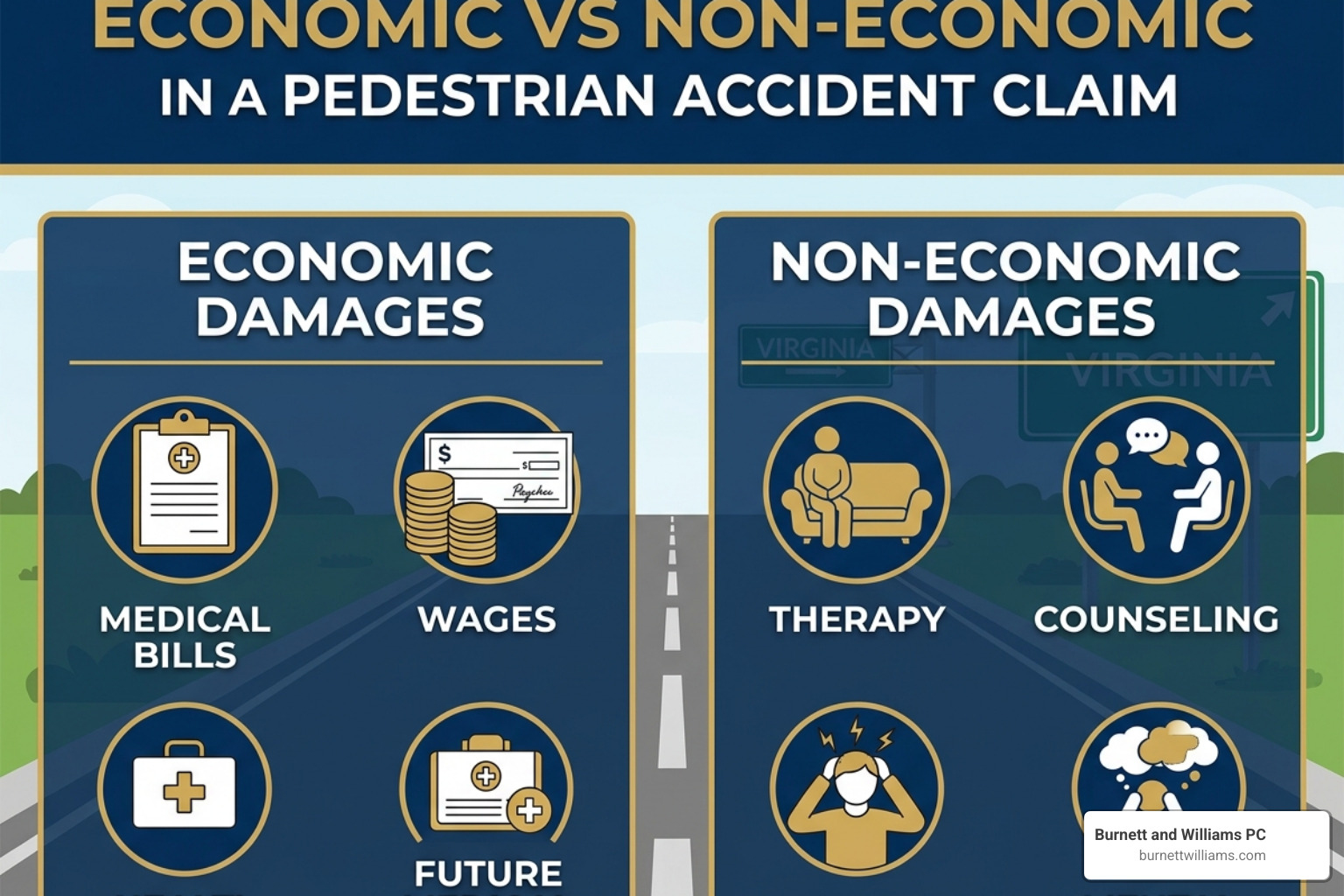
In the legal world: especially in our offices serving Richmond and Midlothian: we categorize damages into two buckets: economic and non-economic. Economic damages are the bills you can count: like the invoice from a Richmond hospital or the wages you lost while recovering. A pedestrian emotional distress claim falls into the non-economic category.
This type of claim compensates you for the “mental anguish” that follows a collision. It is not just about being “upset.” It is about a significant disruption to your mental well-being that interferes with your ability to live your life. Whether you were struck while walking near the Chesterfield Courthouse or while crossing a busy street in Petersburg: the law allows you to seek payment for the internal struggle that follows.
Can You Get Emotional Distress Damages in a Premises Liability Case? This question often arises because the trauma is similar: whether you tripped on a dangerous property or were hit by a distracted driver: the psychological impact is valid. Understanding Your Legal Rights As A Pedestrian In Virginia/ is the first step toward securing the settlement you deserve.
Recognizing Symptoms for a Pedestrian Emotional Distress Claim
Psychological trauma can manifest in many ways. We often see clients who suffer from Post-Traumatic Stress Disorder (PTSD): which might involve “flashbacks” to the moment of impact on U.S. Route 60. Others deal with clinical anxiety or depression: losing the spark they once had for life.
Common symptoms that support a claim include:
- Chronic insomnia or night terrors.
- A debilitating fear of crossing streets or being near traffic.
- Panic attacks triggered by the sound of screeching tires.
- Withdrawal from social activities: like walking through a park in Duluth, GA or hiking in Northern Virginia.
As Pedestrians Risk Death On Roadways more frequently due to distracted driving: these symptoms are becoming a standard part of the recovery process.
The Impact of Physical Injury on Psychological Claims
In Virginia: there is a legal concept known as the “impact rule.” Generally: for a “negligent infliction of emotional distress” claim: there must be a physical impact or injury that caused the emotional suffering. If a car brushes against you on State Route 288 and you suffer a broken leg: the mental trauma associated with that injury is clearly compensable.
However: if the driver’s behavior was “intentional” or “outrageous”: the rules change. We believe that Hypersensitivity Does Not Limit Emotional Damages Court Holds: meaning if you already struggled with anxiety and the accident made it much worse: the negligent driver is still responsible for that “extra” suffering.
Proving the Invisible: Evidence for Your Pedestrian Emotional Distress Claim
Proving a broken bone is easy with an X-ray. Proving a broken spirit is harder: but it is far from impossible. To win a pedestrian emotional distress claim: we must provide a “paper trail” of your suffering to the insurance company or a jury.
We often use a combination of:
- Mental health records and therapy notes.
- Prescription records for anti-anxiety or sleep medications.
- Testimony from friends and family who have noticed changes in your personality.
- Expert witness testimony from psychologists.
As noted in Personal Injury Claims for Pedestrian Accidents (2026) – UKLegalGuides.com: documentation is everything. Even if the accident was caused by something as modern as Injuries Continue To Climb For Pedestrians On Cell Phones: the old-fashioned rules of evidence still apply.
Using Personal Journals to Document Trauma
One of the most powerful tools we recommend to our clients in Richmond and Leesburg is a daily journal. This is your “symptom diary.” It helps us show an insurance adjuster exactly how your life has changed.
In your journal: you should record:
- Your daily pain levels and emotional state.
- Specific instances of panic: such as feeling terrified while walking through a parking lot in Hopewell.
- Activities you can no longer enjoy: like walking your dog or playing with your kids.
This consistent record makes it much harder for an insurance company to dismiss your trauma as a “minor inconvenience.” For more on building your case: see our Pedestrian Accident Claim Complete Guide/.
The Role of Mental Health Professionals
A formal diagnosis is the cornerstone of a successful claim. If you are feeling “off” after an accident: see a professional. They can provide the clinical evaluations needed to link your PTSD or depression directly to the collision. This is especially important for older victims: as A Pedestrians Age Increases Their Odds Of Traffic Accident Deaths/ and serious complications.
Calculating the Monetary Value of Pain and Suffering
How do you put a price tag on a panic attack? It is a complex process: but attorneys and insurance companies generally use two methods: the Multiplier Method and the Per Diem Method.
| Method | How it Works | Best Used For |
|---|---|---|
| Multiplier Method | Multiplies your total economic damages (bills) by a number between 1.5 and 5. | Cases with high medical bills and clear long-term trauma. |
| Per Diem Method | Assigns a specific dollar amount to every day you suffer until you reach maximum recovery. | Shorter-term injuries with a very clear recovery timeline. |
How the Multiplier Method Works
The multiplier method is the most common approach for a pedestrian emotional distress claim. If your medical bills for a collision on Hull Street Road totaled $20,000: and your trauma is severe: an attorney might use a multiplier of 3. This would value your emotional distress at $60,000.
The “multiplier” is determined by the severity of the accident and how much it has changed your life. Following Pedestrian Crosswalk Rules in Virginia is vital: because if you were following the law: your claim is much stronger.
Punitive Damages vs Emotional Distress Compensation
It is important to distinguish between being compensated and seeing the driver punished. Emotional distress is compensatory: it is meant to “make you whole.” Punitive damages are different: they are meant to punish the driver for gross negligence: such as driving while highly intoxicated or excessively speeding through a school zone in Richmond or Chesterfield. You can read more about these distinctions in our Pedestrian Accident Claim Complete Guide.
Navigating Virginia’s Strict Contributory Negligence Laws
Virginia is one of the few states that still follows a “strict contributory negligence” rule. This is an “all or nothing” law. If you are found to be even 1 percent at fault for the accident: you may be barred from recovering any money at all.
For example: if you were hit on the Midlothian Turnpike but were “jaywalking” or looking at your phone: the insurance company will fight your pedestrian emotional distress claim by saying you contributed to the accident. This is why having an experienced team is critical to proving the driver was entirely at fault. Knowing Your Legal Rights As A Pedestrian In Virginia/ is your best defense.
The Two Year Statute of Limitations in Virginia
You do not have forever to file your claim. In Virginia: the statute of limitations for personal injury: including emotional distress: is generally two years from the date of the accident. If you wait too long: the doors to the Petersburg Courthouse or the Chesterfield County courts will be closed to your case. We recommend starting the process early while evidence: like dashcam footage or witness statements: is still fresh.
Frequently Asked Questions about Pedestrian Emotional Distress Claims
Can I sue for emotional trauma if I was not physically hit?
In Virginia: it is very difficult to sue for “negligent” emotional distress without a physical impact. However: if the driver acted with “intentional” or “reckless” disregard for your safety: you may have a case. This is often called “Intentional Infliction of Emotional Distress.”
How long do I have to file my claim in Richmond or Midlothian?
You generally have two years from the date of the accident. However: if you are filing a claim against a government entity (like a city bus or a municipal vehicle): you may have a much shorter “notice” period: sometimes as little as six months.
Will my settlement be reduced if I was outside a crosswalk on Route 360?
Because of Virginia’s contributory negligence laws: being outside a crosswalk could potentially result in your claim being denied entirely if a jury finds you were partially at fault. We work hard to investigate road conditions and driver speed to show the driver was the responsible party.
Conclusion
At Burnett & Williams PC: we know that the trauma of a pedestrian accident does not end when the sirens fade. We are committed to providing compassionate advocacy for our neighbors in Richmond: Midlothian: and throughout Virginia. You should not have to carry the weight of “invisible wounds” alone.
If you are struggling with the psychological aftermath of a collision: we are here to help you navigate the legal system and hold negligent drivers accountable. Contact our Richmond office for a free consultation and let us help you start the path to recovery.